 AC/DCFor Those About to Rock We Salute You
‹ Back to Episodes
October 30, 2023
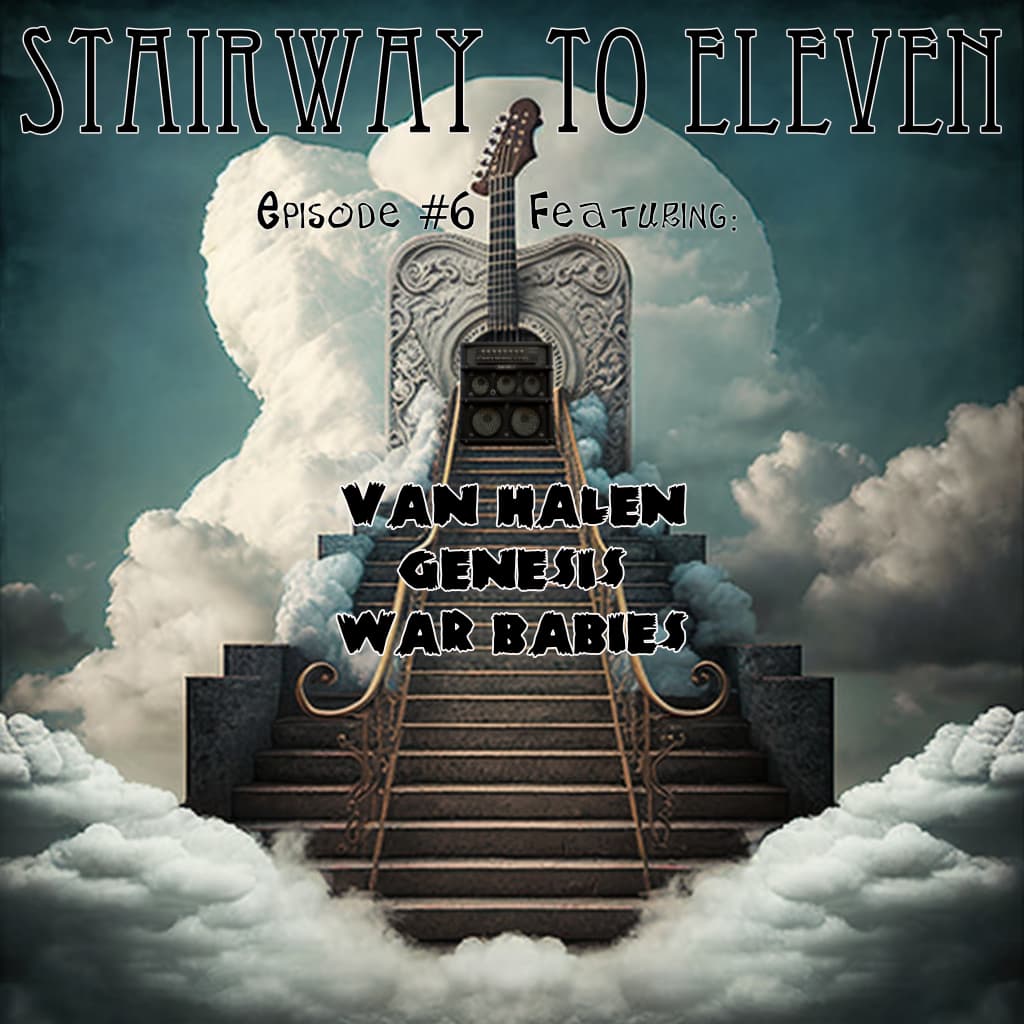
Episode #6Stairway to Eleven Episode #6 - Van Halen, Genesis, War Babies
October 30, 2023 ◷ 2:37:04
In Episode 6 of the Stairway to Eleven rock music podcast we delve into Van Halen's iconic "Fair Warning," exploring the raw energy and virtuosic guitar work that defined the band's sound. Genesis' "Foxtrot" is examined for its progressive rock brilliance, taking listeners on a musical odyssey through intricate compositions and storytelling. Lastly, the self-titled album by War Babies is highlighted for its underrated gem status, showcasing a fusion of hard rock and soulful melodies.
6Albums Mentioned in This Episode
View Albums
Albums Mentioned in This Episode
View AlbumsOur AI is a real Trooper (Up the Irons!) but it still doesn't get everything right. So please excuse any missing or incorrect items.
#ArtworkArtistAlbumYou Must Listen
AC/DCFor Those About to Rock We Salute You

 Alice in ChainsFacelift
 GenesisA Trick of the Tail
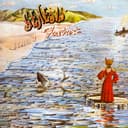 GenesisFoxtrot
 GenesisGenesis Live
 GenesisNursery Cryme
 GenesisSelling England by the Pound
 GenesisThe Lamb Lies Down on Broadway
 Jethro TullAqualung
 Skid RowSlave to the Grind
 Steve HackettVoyage of the Acolyte
 Temple of the DogTemple of the Dog
 The Rolling StonesSteel Wheels
 TKOLet It Roll
 Van Halen1984

 Van HalenDiver Down
 Van HalenFair Warning
 Van HalenVan Halen
 Van HalenVan Halen II
 Van HalenWomen and Children First
 War BabiesWar Babies
Spotify Playlist
● Open SpotifyA bug in Safari prevents playing full songs, please use Chrome.
Transcript
View TranscriptDownload Transcript ⇩
Transcript
View TranscriptDownload Transcript ⇩ⓘ This transcript may contain errors. Please don’t quote it in your yearbook.
There's a podcast that's sure all that rocks hard is gold. And they're climbing the stairway to 11. When they get to there they know the record stores are all closed. But online they can get what they came for.
Oh, and they're streaming the Stairway to Eleven.
Hello, and welcome to the latest episode of Stairway to Eleven. My name is George.
This is John.
And I'm TR.
Today we have three new albums to discuss for you.
And the first one today is from John, so I'm going to let him jump right into that.
So, truth be told, this is an album that when we first started thinking about doing this, this was immediately on my probably top 10 or 15 list right off the bat. Actually, probably five, I thought of this album. And I'm pretty sure that this was on TR's initial list probably at some point, too. I don't know if it was in his upper part of his list, but I'm pretty sure it was.
And this is going back to when we were talking about this in what? April? May? Maybe? I guess when we first started. I guess it was at Desk, but we started talking about doing this together, the three of us. So it's just been a matter of time before this was going to happen. And it just so happened that when we decide to pick our albums at the end of each recorded episode, you don't hear that part. I went first this time and I stole this from TR, who was going to pick this very
I was going to pick this next. Yes. And I think you probably would agree. This is probably an album you had on mine early on, I would think. Oh, yeah. Correct. Yeah. Okay, cool. Definitely. Yeah. And so it seems fitting that I'm actually going first then, seeing as I stole his album. The dirty little secret you don't know is TR stole one of my albums for his album tonight, which I would have selected at some point. So, George, you would not have escaped. Might have been further down the road. You would have been subjected.
to both of these. Yes. So I am returning back to the 1980s because I cannot get out of this kind of 80 to 83 range just because that's where I cut my teeth. And this is an album that I would say that I said this, I think twice now on here. This is one of my all time favorite albums. And I don't think there's any doubt in my mind like, oh yeah, this week it's on my list. Next week it's not. No, it is.
And it's probably in my top 10. This is a really important album. And I've got plenty of hot takes about this band. But in this album, I have a hot take on. But with that said, the album I chose for this week is Van Halen, Fair Warning. And he gave us Fair Warning that we were going to be listening to it. Yeah. Oh, yeah. Yeah. Van Halen, Fair Warning. Not one, not two, and not 1984, Fair Warning.
And let's get into it. So this is the fourth album from the band. It was released April 29th, 1981. I mentioned the dates. I usually don't mention dates. I usually mention the month, but I mentioned the dates because they pretty much recorded this album in March and April of 1981. That's how fast the turnaround was on getting this album out the door. And it was recorded at the famous Sunset Sound Recording Studio in LA. I think it's right there in or on or around Sunset.
Strip. It's a famous place. And it's a famous place for Van Halen because I believe at that point they recorded all their albums there, if I'm not mistaken. Yeah, and even some of the demos. Yes. And the sad thing about this album, unfortunately, is their least performing album on the charts in terms of sales for the early period of the band. So the first David Lee Roth period, the first six albums, is by far sold the fewest albums worldwide.
which is surprising when you consider how good this album is. And how much payola they did. Yes. Which most people didn't know. They had to actually resort to payola to get attraction. Because there were no real big hits. Which, as we'll come to talk about, two of the best songs they've ever written are on this album. In my opinion. And their best song they've ever written is on this album. And I'll take that one.
I think I know which one that is. It's a little instrumental. No. Just kidding. Anyway, some key things about this album. This is the first time the band recorded a true studio album. The first three albums, when Ted Templeman got them in there, he was like, let's do this live. Let's get it going. Let's get you in your perfect state, which if anyone knows anything about early Van Halen, they were a road band in their area. They played live all the time in front of weather.
is in the backyard in front of 2,000 people and having cops coming down to shut a neighborhood down or playing on stage in one of the famous clubs, whether it be in Pasadena or in LA. So this is the first time they actually recorded as a band in a studio, meaning recording parts, not playing live, which is kind of unusual when you think about it because there's not that many overlays on this album, but there are much more on the guitar parts because Eddie started experimenting more with what he could do.
He was actually into doing the studio thing this time. More so. The album's darker. It's gritty. It's heavy as anything on this one compared to other stuff. They've always had heavy stuff, but this one came in with a different feel. There's no party atmosphere on this album. Dave isn't like, woohoo, party girls, woohoo. There's a little bit of that. A little bit. Just a little bit. Not much. You can't take the Dave out of the Dave. No, but Dave is restrained.
Dave is actually, I think, more serious on this album. And that would probably be because he had traveled the world. I guess he had been in Haiti and didn't like the situation down there. And his lyrics kind of were a result of some of his experiences traveling around the world. Dave had a different upbringing than the guys from the Van Halen family. Dave came from a well-to-do, fairly decent family, whereas the Van Halen brothers, they weren't exactly raking in the cash as a family. So different perspectives.
So I kind of changed his lyrics and it shows in the lyrics, no doubt. And I'm not a big lyric guy, but on this album, it shows because, you know, those early albums, it's like, woo, beautiful girls. Yeah, I want your love, baby. And there's a little bit of that here, but not as much. Let's see. What else do I have here? I want to make sure I catch everything. I got a lot. And so I apologize for pausing for a second. This album was kind of panned when it came out. It got decent reviews, but the same complaints were, well, there's no Van Halen atmosphere. There's no hits.
And over the years, this album has begun to create itself its own kind of cult status. So now where with hardcore fans, it's probably their one or two album. I think when you ask a lot of fans, they'll tell you that. And it's gotten a lot more kind of praise from the critics over the years, but it took a long time. And like TR mentioned, they had the result to payola. If you don't know what payola is, that's pain to have your music played. They had the result to that. I don't know, TR, did they know, did the band know they were doing that?
It was that management that did that. According to Noel Monk, who was their manager in the book he wrote, I guess it was Running With The Devil, is the book that he wrote about his time in Van Halen. It was actually brought to the band like, hey, we're not going to get, this is not going to get radio play. If we want to maintain the level that we've had and we've set for ourselves, we need to put the equivalent of, I think it was $250,000.
And in, you know, early 80s money, that's a lot. Oh, yeah. It's like dropping a million dollars on the spot, basically. Yeah. And so, yeah, in his book that, you know, they basically said that, like, they they paid, like, you know, numerous radio stations to to play this. And, you know, obviously you have like your larger markets and then your smaller markets. And and they would just, you know, and he relates a segment about that where, you know,
The band was kind of outraged. You're like, what? It's going to be how much? What are you kidding me? But the fact was they had come off of three big albums and they wanted to maintain that platinum status. They wanted to make sure that this album went platinum. And I think they were concerned that might not happen due to the fact that there really weren't any, initially, there weren't really any big hits off of this album.
Not at first. Right. Nothing emerged initially. And I think that's, you know, that was a big concern because they, you know, they definitely wanted to maintain the status of the band. And, you know, they had established themselves, obviously, as one of the world's greatest rock and roll bands. And I don't think they wanted to see that drop off. And so, so yeah, that's what, according to Noel Monk, who was their manager, that's what they did.
Yeah. And if I'm not mistaken, he didn't like the album that much either. If I read correctly, he kind of panned it a little bit. And, but there, that might've been some issues because he was having problems, I think with the band at that point or after that point, I thought I'd read that, but why didn't the label just be like, Hey, write us a hit. You know, I mean, back then that's what they did. The reason they were here at this point is because that's what happened on Van Halen too. They didn't have a song to put out for the album.
And they needed a hit song. And if I understand the story correctly, Eddie, like, okay, fine. And he wrote dance the night away on the spot or relatively quickly. And they got that thing cranked out because the stories behind the song and the solo, how it's out of key or out of tune or something like that. And his good friend called him out and said, it's out of tune. He's like, yeah, but we think it works. It goes well. That song went, it was huge. It just blew up that album. Even though there's no other hit song off that album that you could put on the radio, that would,
be a big draw like they had on the first album right that's what kind of killed it i think
because if you think about it and women and children first there are two big songs off it but
they're not like they're you really got me which you know are running with the devil or jamie's crying
they're not those type of hit songs they're a little edgier songs so anyway so let's move on to the songs
themselves we're going to start off with the first song which in my opinion i'm not a guitar player
I state that wholeheartedly. I'm a drummer. But I think this is the greatest intro to any guitar song in terms of soloing. Not riff, soloing. That's the song Mean Street, which kicks off the album, which to me is their second greatest song ever written. I know it's heresy to some Van Halen fans. I really don't care what you think. I think this is their favorite. It's got this amazing tapping intro, which
At the time people tapped and they knew about it, but nobody ever opened an album that way. Especially the way he does it on that. And it leads into one of their most iconic riffs, which is actually a riff that was used in the old Warner brother demo days, which was really just like five or six years prior to that. The song voodoo queen is what they used the riff from that. They kind of, they revised the song that much, but they completely changed the lyrics for it. Yeah. Now, originally they were
They wanted to with this song called Growth, which was at the hidden song at the end of And Women and Children First, which is after In a Simple Rhyme. But they kind of panned it. And while that would have been really cool to do that, I think that they made the right choice by going with this intro to Mean Street. And if you don't know what I'm talking about, just go listen. Because it's insane. I know full well everyone will always say, oh, Eruption's his greatest moment. I don't know.
I think this might be his greatest moment personally. And I know he really thought a lot of it. And if you want to get even more validation, go check out, there's a YouTube channel called Airplay Beats. And it's these two dudes that are rap guys, but they listen to rock songs and blues songs and give their initial reactions to the songs because they've never heard them before. And they admit, they say, hey, we're rap guys, but we want to listen to stuff we've never heard before. And if you watched our video for this,
It starts out and the tapping comes on and they're just kind of sitting there
And as the song builds and then the riff starts and then the band comes in
They start head bobbing together at the same time without looking at each other
It is one of the coolest things to say
Absolutely
Yeah
From start to finish this song is incredible
It's got some of Dave's grittiest lyrics ever
Talking about basically being on the streets
You know how things are tough
There's a lot to love about this song
I think the bass work on this song is amazing
There's a groove. I'm going to steal something that the two guys from the Airplay Beats channel said about this. Dave is basically an early version of rapping on this. He does. He sort of raps the lyrics out on this. And it's interesting to hear him sing like that because he's not being goofy. He's being serious. And I think this is one of his better performances. Not just his song, but the whole album. Funny. I've got more to say on that later. Okay, cool. It has the traditional
breakdowns are not like current breakdowns in metal songs. Their breakdowns are where the band kind of slows down and Dave says something really silly or stupid like, you know, reach between my legs, ease the seat back. You know, I like the way the line runs up the back of your stockings and all that stuff. It's in this song, but this one's darker and it's a little disturbing to hear the lyrics, you know, about how, you know, Lord strike that poor boy down and Eddie doing his scratch
on his strings to make it sound like a ricochet gunshot bullet. Very cool song. I don't want to waste. I've wasted enough time talking as is because I could go on and on about this. But this is my second favorite. Not only does I think it's their second best song, it's my second favorite Van Halen song. And they've got a lot of great songs, both in all eras, minus the Gary Sharon era. So. Screw that guy. I will. I know that's a little extreme. Oh.
Wait, wait, wait, wait. All right. And if I sound like I'm a little all over the place, I have so much written about this and it's hard to read it all at once and to put it in order. So I'll stop and let you guys jump in now. Well, for me, it's Van Halen. What more do you need? Next album. I'm ashamed to say that this is one of only two songs on the album that I really know particularly well.
And in the high-res flack through some Heavies headphones, it sounds as bright and fresh as if it was released last week. So it sounded amazing. Now, did you use that 192 version I gave you? Yes, I did. So the remasters from 2019, that's some of the best work I've ever in terms of balance between instruments and vocals. So that's all I'll say. I'll let you go from there. Sorry. No, it sounded great.
Edward sounds freaking amazing, but then again, why wouldn't he? Yeah. So, okay, John, it's going to be hard for me to hold myself back on this because like you, this is like a huge album for me. One of my favorites. And you did steal this album. So yeah, for this first song, what an intro, right? Like just more of Eddie's tricks and he's revealing something that he hasn't done yet, right?
Like the, even though this is tapping, it's a different kind of tapping. It's not melodic tapping. It's rhythmic tapping. And it's just a, it's a whole new palette of tools that we haven't even heard yet. And so, yeah, that's just like it builds and then bam, here you go into this song. And I agree the rework lyrics from Voodoo Queen, the lyrics here are much better.
And I wrote the same thing. This song is gritty. And if you listen to interviews like on Rockline and various other things from this time, Roth always said that Van Halen was more like a gang than a band. And the lyrics definitely make you believe it. You know, you can talk about life on the streets. And but it like when you listen to this music and you listen to the lyrics, you believe it. Right.
It doesn't sound like a bunch of posers. It sounds like he's really talking about something that is real. And then I just got to say, the solo in this song, Eddie's solo in this song is ridiculous. Which one? Or the ending? So both of them, they're both insane. It's like no other solo that you're going to hear anywhere.
I love this album so much and John you know I'm so glad like it's really it's hard to hold back on on like I could talk about this for probably the rest of tonight but we really got to move on so that's that's pretty much all I'll say about Mean Street I will say there is one minor gripe and I think you'll agree with me on this TR and this is so minor but to me it's actually still really big I hate the fade out in this song because he's absolutely and he's absolutely going off
and it fades out and you can hear it. Especially if you keep turning it up a little bit on your headphones. You can keep it. He's just going crazy. Right. I mean, let's face it. We all did that, right? Like we all like we're like, you know, because you're so hungry for what he's doing that when you get to the end of the song and he's just like ripping it up, like you're raising the volume all the way up as it, you know, you're basically doing the inverse of the fade with your volume knob to be able to hear like what's going on. Right. And, you know,
somewhere at Sunset Sound or Warner Brothers in a vault somewhere, there's probably the rest of that solo at the very end, the outro of that song. And wow, wouldn't it be awesome to hear the rest of that? I don't know. It's like there's how much stuff in the vaults is there? It makes me sick to think about it. And the fact that we may not ever hear it, you know, just because the Van Halen camp seems to have no desire to put any of that out.
And it's a shame. It's a dreadful shame because there's so much stuff back there. Some of the demo stuff and stuff that they've already taken off the shelf and they prepared it to release. If you listen to some of those Sunset Sound interviews with some of the guys that work that stuff, they've talked about the fact that, yeah, we got all the demos and we actually did everything necessary to remaster them and put them out as a release. And Warner Brothers has it.
It's just sitting there waiting
and you know
it's like so tantalizing
and we're just sitting here waiting
and every like every Van Halen fan
I guarantee you
would give their left arm to like you know
hear that stuff
and they're just sitting on it
Yeah it's too bad because I just
and I was just trying to see if I could find it
I couldn't find it
but I just
you know things keep sneaking out
on YouTube
and it's been happening a lot recently
and I just came across a video
And it's a song off the first album. And I can't remember which one it was, but it has a fade out on the outro, the song. And this was the full version. So it was basically as if like Joe Barisi had got a hold of it, like he did with Dio for Diver Down, or Holy Diver. Diver Down. Yeah. Holy Diver Down. Pretty woman. Walking down the rainbow, pretty woman. Exactly.
And I was like, whoa, that is really cool how they finished it. So, and I bring this up because I'm really going to bitch about this on another song where the outro happens. And I'm just like, you gotta be effing kidding me. Anyway, we'll move on. Song number two is called Dirty Movies. And this is an interesting song because first of all, the title. And secondly, it's not your traditional second song follow up. It opens up with this kind of subtle
drum groove and bass harmonics that kind of lead into this really cool mid-pace catchy riff that kind of wails you know once it starts up again the bass work from michael anthony and the drum work from alex van halen are outstanding on this album i actually think this is michael anthony's this is his peak performance on any album his vocals are great his bass playing is great he's aggressive it just works for these types of songs
And it's got this great chorus with great backing vocals. And these vocals, these backing vocals are different. They're not as high for him. They're a little lower in his register. Still high, but a little lower. And they actually sound better, I think. And if you need to know the lyrics, you know, which again, I'm not a big lyric guy, but on some of these songs, I paid a little attention. You know, it's the lyrics about a prom queen that goes to become a porn star. You can read the rest.
It's definitely a deep cut, but I think this is a very good deep cut. I think it's underrated. Again, I always thought it was kind of odd to have this one second, but it's still a great freaking song, and it continues that dark, kind of gritty, not party atmosphere at the Beach Van Halen. I was just wondering if you guys caught my guitar solo there at the beginning, like at the very beginning. I taught Eddie a thing or two that day, you know, the one that's like,
Like somebody's like dropped our guitar at the very beginning.
And then Eddie comes along and he ruins it with like a quote unquote real solo.
Whatever.
Think you're so cool, Eddie.
But yeah, this ended up being a lot hookier than I expected for a song like this.
And you know, fine.
The guitar playing is adequate as well.
I listening to this, listening to this song made me want to move in funky slow-mo, like particularly towards the end. It was just like groovy, baby, groovy. You know, you can't see my arms. It's a different mid-paced song for them. Definitely. Yeah. So I said this probably wouldn't get released today. I don't know. What are you, that's true. What are you insinuating about my solo? I'm just saying that in, you know, in a rock format,
this probably would not get released today. It feels like you're in a strip club with the band pretty much. It does actually. Yes. Like you're there with them and you know they're hollering take it off take it all off and it's just yeah George I know what you're talking about because in the beginning of that song Eddie's just doing some really weird like scratching linking around on the yeah and it just seems weird at first and then he really gets into it. Yeah. Yeah. And then it's like oh that's cool. Oh yeah. Okay. Yeah.
I mean, but it is a little, you know, kind of weird, right? And he's always kind of sprinkled in some of those kind of experimental strange things in there, which, you know, is appreciated and pretty much nobody's doing that, right? Like just him, he does that and nobody else does that. And so the other thing that I want to mention on this is Roth's screams on this are excellent. Like his high pitch screams, like, so I really,
I really appreciate the vocals. And John, you know, you alluded, you know, yeah, he's kind of rapping a little bit on some of this stuff. And I agree. And when I watched that, you know, you sent me the link to those guys that listen to this stuff. And it really put it into context for me that I had not thought about. But yes, you know, and I know Roth was listening to that stuff because he was interested in lots of different styles at that time.
And he was listening to a lot of different things from different cultures.
And he absorbed all that.
And so it's not surprising that, you know, he would employ that technique.
But then, you know, he's also got this other element to his vocals where he's got like these just, you know, almost like high shrieks that are just, you know, beyond comprehension sometimes.
And so yeah, like his screams on this really kind of add to the exuberance of certain moments in this song that I totally love and appreciate. I like one thing about his screeches. I'm really glad there's not that many on this album because it's the one thing about him. It's fun and fine once in a while, but when he's doing it every song, it's getting old for me real fast. And I know he no one else was able to do that back then.
But sometimes it just ruins a spot for me because I don't think he's a very good singer. I know people will say, yeah, he's good, but he's a great entertainer. Yeah, he is. He's an entertainer. He's not a singer. And on this side, I thought he actually did a really good job. I thought his harmonies with Michael Anthony on this were better than they had ever been up to this point. And I kind of want to just hear him do that. And I don't need the screams all the time. That's just my own opinion now. So.
Well, and yeah, I mean, I've always referred to him as a vocalist more than a singer. But he's not because a vocalist has training. He has no, he tried to train. Dave just stopped by. I would. What's that, George? I was making fun that he's like, oh, he's squawking like a. He's a singer. He's not. I mean, I actually keep bringing this up, but I went and I researched that and vocalists actually have full training and he has his training was just so he could sing.
And he never really graduated to an upper-type level singer. I guess I have a different interpretation of vocalist then, because to me, a vocalist is not really a singer, but can sing, but is more of a vocalist. I'm getting this from vocalist coaches. This is their description of what it is. All right. Well, then, yeah, I guess I need to reorient myself, because... I'm not trying to say you're wrong. I've never...
Yeah, right. If there's an official definition for this or whatever, then I'm fine with what that is. But when I thought about Roth, I thought of him more as a vocalist than as a singer because he's not always singing, right? He's kind of rapping through stuff and shouting and screaming. He does whatever he does. He can sing, and he does.
But, you know, he kind of supplements all of that with a variety of different vocal things that he does. He's too bod-filled for me. That's my issue. Just a gigolo, and everywhere I go, people know the part I'm playing. You've got one of the greatest guitarists ever to live and rock, and he's clowning. And sometimes he's just, oh, God, stop. I've got more to say on that, but I have to wait for the next song.
All right.
Yeah.
Well, then let's get into it.
All right.
Let's move.
Next song.
Third song is called Sinner Swing.
This is a banger of a track.
It just kicks right in.
And it's got this kind of almost bebop vibe to it with heavy guitars.
It was originally titled or originally penned on the lyric sheet from David Lee Roth,
Get Out and Push.
And you hear that in the lyrics, which is kind of cool.
But they change it to Sinner Swing.
Great guitar work.
Does some chaotic guitar playing.
He does some crazy stuff, but the star of this song for me is Eddie's rhythm playing. I mean, it's just outstanding on this, and it's heavy, and it's beefy sounding. You know, it's got this just oomph behind it, and I'll be honest, if the band hadn't started, things were starting to get a little tense in the band, and so their live shows started suffering, I think, going forward because this album got lost in the shuffle because the diver down
And they started doing all these covers
and the sound started changing at that point.
I mean, Eddie was already past all this stuff
by the time Diver Dog came out.
And this is a song that should have been a live staple all the time
because it's a great second song and on a tour.
You know, you open up with a song and you rip into this next.
It's got a great chorus.
It's easy to sing to.
And all I'll say is that I think it's one of their better songs.
Again, another deep cut.
But the rhythm playing on this is just outstanding. And most people don't think of him as a rhythm player. He's one of the best or was one of the best rock rhythm players ever. Period. I mean, there is Malcolm Young, who was amazing, played simple stuff, but it was pretty amazing. And he's pretty damn good, too, or was pretty damn good. James Hetfield, the right hand of God. It's the truth. He's right now. The funny thing is, Malcolm Young and James write all the music for their respective bands. Malcolm did.
And Eddie did also wrote all the music. So. So I'm retreading the ground you just went over, but I said, David Lee Roth really only has one trick, doesn't he? You know, he, everything he does sounds like Dave. He sounds really cool, but his vocal style is like 60% attitude, 40%. Like, you know, it's all about the way he does the vocals. And I call them vocals because it's a vocal style. Yep.
And, you know, on this song, the contrast comes in the form of the backup vocals, which I think are much more pleasing ultimately in the song than the main vocals. And so I pose this question to you now. Do you think if David Lee Roth had never been in Van Halen, would he have made it on his own? No. If David Lee Roth had never been in Van Halen, would have never made it. That's not necessarily true. They wouldn't be the same band, but they would have made it in a different way.
They might have made it, but it would not have been the same. I guarantee you. Well, they would have had a much better singer because the singer they would have had eventually joined the band. Well, that's true, but... I mean, Sammy Hagar was tapped to replace David Lee Roth before the first out. Templeman had produced both Montrose and Van Halen. And there was a push to get rid of because they didn't like him. Early on, Ted was like, this guy can't sing. And he tried to get training, but then there was like, well, wait a minute, there's this other guy who can really
really sing.
Yeah.
And you know what?
Like, look, George, I think you've got people here that, well, not here, but like in the Van Halen camps, you've got ardent David Lee Roth fans.
Oh, and I'm one of them.
Yeah.
I mean, when he left, I was outraged, even though I like to say me, hey, guy.
So to your question, I would agree that Dave needed an incredible talent behind him. To pair with. To be propelled, right, yeah. But he also propelled Van Halen with the attitude, the style. I mean, it wasn't like Dave was devoid of talent, right? No, of course not. I'm not trying to really say that. Only that
It was the chemistry of Eddie's playing and Dave's charisma that made it what it was. And I would like to think that removing Dave from the picture, Eddie's incredible talent would have risen to the surface anyway, whoever they got to sing. Dave, if Dave ended up with a second-rate backing band, would he have still gotten his big? He probably would have made some sort of dent, but would he have been
been as big as he was. And then when he went solo, he did fairly well for the first couple albums. But he was playing off of the notoriety of his previous band. So it's just curious. Van Halen would have done at least something well because they had the backing. I mean, Ted Tebelman knew how good they were. They would have found somebody. So that's the difference, I think. They would have found someone to sing.
What if Gary Cherone was the first singer of Van Halen? And David Lee Roth was the third. He would have been about 13. Hey, Michael Jackson. You know, Stevie Wonder. Hello. What's his name? I'll never forget old what's his name. Steve Winwood. That would have been kind of wild. That would have been a little different. Contrasting styles, but not sure about that. All right. Well, what's your take on this, TR? So, center swing.
the beat here, which lends to the swing. And I think that's what really gives this song the push and pull that's going on in there. And Ed understands that because he's playing with his brother on the drums and they played their whole lives together. And you can tell that these guys are in the pocket and they understand how to play with each other. And to get that feeling of the song, Ed understands that he's
He's got to play behind the beat to give it that feel. His solo is mind-blowing in this song. And the little percussive scrapes that Ed throws in are really cool. That really gives it an extra, like what you were talking about in terms of rhythm. You know, Ed always played both parts. And that's why in some of the early recordings that he was doing, and they're saying, oh, you know, we got to do a take with your solo. He's like, I do the rhythm and the solo. I just do it all.
Like, you know, he put it all together. And so if you listen to like some of the live bootlegs, early, early live bootlegs of them, or even any live, you know, any kind of live Van Halen from the early days, he's playing everything. He's doing the, he's doing the rhythm tracks and then he's going right into the solo. And so there was no difference to him in terms of like, okay, here's where the solo would go. And I'm going to keep playing this rhythm underneath it. He's playing the rhythm and he's playing the solo.
And that's why I think he had such a hard time with overdubs and doing a different segment. Because he had always just played the stuff live throughout the whole thing. You can tell he's playing the rhythm and then he's doing the solo over top of it. So, I mean, he just kind of, that was his style. He just did it. He did it all. And he did it all as the song was happening.
So there was no need for overdubs in his mind because he was covering everything.
He's like the guy with the kick drum on his back and the, you know, doing all, doing the whole band in one.
Yeah, pretty much because he was, you know, he was capable of, of covering all that. And, and you can hear it in a lot of these songs, you know, he's going very fluidly from solo to rhythm parts in behind.
And then, you know, whatever it took to kind of give the song the texture and the rhythm or the percussive stuff that it needed, he was just doing it all the time. Right. But this is the first album where he actually started adding more guitar layers. This is the first time. Right. Absolutely. And it was the first time where it was like, you know, they kind of convinced him, yeah, we need to do these extra solo takes. And, you know, prior to that, I guess he had a hard time.
you know with that or didn't really I don't know I think he felt it was like it put him out of his comfort zone because you know he'd always just done all of it elf well he sparred a lot with Ted Templeman about what was good and what wasn't if he because he had his vision and Ted's like yeah I think this is better and they would spar a little bit and which yeah it's gonna come up in a couple songs that does come yeah yeah well and you know Ted definitely had his successes so it's not like you know he was coming from a place that you know was
Of course. Yeah. Yeah. But, you know, definitely it had his own idea of what, you know, what it needed to be. All right. So we're moving on. Yeah. You good. Okay, cool. All right. So the fourth song is a song called Hear About It Later. And this is where they kind of slow things down a little bit. Not so much like they slow it down on dirty movies, but this actually the full song is a little bit slower paced. And this is one of three songs. I swear there's a fourth because I saw it, but.
We'll just go with what we know about that we can find right now. I know where you're going with this. There are three songs that were recorded live to put on MTV from this album, and this is one of the songs. And it's from the June 12th, 1981 Oakland Arena show in Oakland, California. Got myself an Oakland scarf right here. Let's not get ahead of ourselves. Oh, sorry. That's going to come up. Okay. Yes, that's the show that Tierra's talking about. And it's
to see where they came from, from the Van Halen Rising period, which was pre-Van Halen 1, to seeing that show in Oakland, which mind you, that is one of the shows I regret not seeing in my life because I was one year too young to see it when they played, and this was in my backyard. It's just, they've got this just massive stage. This song itself sounds amazing live, but to get to this song, it's a slower song. It has some different dynamics.
again from Eddie on this. There's a very cool middle section of bass and I got a fever and the only cure to my fever prescription is more cowbell. Some cool cowbell work. And if you watch the live version, it's actually very cool how they do it. It was originally written on the keyboard by Eddie and I got that from the Van Halen news desk. I didn't know that until I read that recently. And what most people don't know, unless you're a hardcore fan, is that he didn't
He started out on piano first
I knew that
Awesome
And he's a very good piano player
And that's why this started creeping in a little bit
At this point
Because he was getting the itch to do something different
And it starts showing up on this album
But I actually thought that was really cool to find out
He didn't write the intro
And the song on guitar
He wrote it actually on the keyboard
It's another deep cut
I think this is one of the better choruses on the album.
This is a little more, it's a dark lyric, but it's sung a little more bright than some of the other stuff.
I think the harmonizing between David Lee Roth and Michael Lanthier are great on this.
And I think Eddie sings on this one too.
Eddie was actually the original singer in the band.
Again, some people don't know that.
You know, he used to sing it.
He said he couldn't do it anymore.
So there's too much work with all his soul.
Like go figure.
That's weird.
Anyway, it's a cool song. Go tell Geddy Lee, right? Yeah, well, Geddy wasn't soloing, playing rhythm guitar, doing jumps. He was playing keyboards with his feet. And smoking sick. Anyway, I love this song. I know some people don't dig it because it's a slower, mid-paced riff and vibe, but I think it's another. This album is all deep cuts minus two songs, and these are the best.
deep cuts they've ever had, which ends up making the album from start to finish awesome, in my opinion. But anyway, go ahead. How about it? I liked it. I dig the clean, watery guitar intro. I don't know if that, it's probably like a chorus effect or something. It's a little more watery than like a reverb, but I liked that. I said kudos to the backup vocals again. Again, Dave does a thing and then everybody else picks up the hook, you know, and I likened it to James Brown and living in America, you know?
It's like, I mean, I'm not dissing on James Brown here because the man was a legend, but come the 80s and Rocky IV, when he did Living in America, it was a whole lot of... And then the backup singers are... Living in America, you know? And that was the hook. And in the case of this song, that's where the hook is too, I think, personally. But... I never thought I'd... I never thought, like, hear about it later.
compared to living in America, but okay. Hey, I put Concrete Blonde and Genesis in the ring together. That's true. And I, you know, that's what we do on this podcast. That's why I keep coming back. We are very special. Hey, Jeff Rotol and Beavis and Butthead. Yeah. So I, you know, I'm listening to the song and eventually I was like, Hey, whatever became of that chorus? Because I felt like the, the, the last half of the song just sort of wandered away. Like there was,
a really long break.
And then like, I was like, huh.
Yeah.
And it's like, they never got back to it.
They never got back to it.
I was like, that's cool.
It's fine.
It's still a cool song, but yeah.
Well, yeah, that's okay.
Because you know what they ended up doing was still awesome and pretty cool too.
Yeah.
I liked it.
So yeah, definitely.
The cool intro definitely gives this a cool texture.
The solo is unexpected.
And John, as you said, you know, it starts with bass and drums.
And it's like, what? You know, what's going on here? Like, all of a sudden, boom, boom, boom. And you just like, there's no guitar, right? Like the solo just starts with the bass and drums. So it's like, okay, what's going on here? And all of a sudden, this bass is really dark on this too. It's kind of foggoning. Yeah, definitely. And then bam, Ed comes in and it's like, oh, yes. You know, you had to wait. It's like, wait for it. Okay. Yeah, here it is. And then again, I know, John, like, you know, you're not a big fan, but
Roth's screams on this are awesome. Especially at the end where, you know, where Ed, you know, where just where he's just like, where the song ends on a scream. And for me, that's just, it's just, it's almost, it gives like the hairs on my, the back of my neck stand up every time I hear the screams at the end of this song. Cause it's just like, it's like a shriek and it's just,
It's pretty much like David Lee Roth was lit on fire, you know, and that's what it sounds like. Like somebody lit him up and he just was like shrieking from like burning. Too much hairspray. Maybe so. Oh, see, I thought he just never combed his hair. That's because I figured he didn't use the hairspray. Everyone was trying to get his kind of disheveled look and they use the hairspray to get that. Yeah, I was thought was kind of funny, but I don't always use a comb.
But when I do, I use a balloon.
All right.
We're moving on.
Yeah.
All right.
So we move to the middle of the album.
This is the song that became the hit off this album.
It's off the hook.
It's certainly not chained to anything.
That's for sure.
This song is unchained.
In my opinion, there's not even any question about this.
This is their greatest song.
And if you don't believe me and you want to believe somebody who's got like 4 million followers on YouTube, then go check out Rick Beato. If you don't know who that is, he also agrees with me. He thinks this is their greatest song ever. And I don't have, I don't have any followers on YouTube. And I agree with you, John. Rick Beato is actually, that's a cool channel to watch. Oh, I know. Oh, dude, I've checked him out. I definitely, I agree. He knows his stuff. He's a, yeah, he's a scholar of music and he knows what's, what works and what's real. And yeah, I'm all about it.
I'm not a guitar player, but I'm going to say this is the greatest rock riff, hard rock riff now I've ever heard. It's perfect. This is the perfect song. It's lean. It's only three and a half minutes long, but there's a billion things going on in this. The intro with him playing just this riff, and I had to go look this up. He uses a flanger on this song. Is that the right word? Yeah, which gives that kind of swooshing. Yeah, that's been the other thing I was trying to think of, too.
And the thing that's so cool about it is that he's got three different parts on this riff. He's got this riff. Then he goes kind of into this kind of chug. And then he does this flanger and he puts them all together. And the flanger happens the whole song. It happens during the chorus. He doesn't get rid of it. And you have to listen. And when you have these new headphones that George and I keep going on and on about. And Marcus on has too. And Matt will soon too from the Metalheads podcast. They're called heavies, made for heavy metal music.
but it works with this album you can hear all this crazy shit he's doing on this song more than you could normally this is another one of the songs where he doesn't lay over much on this at all if anything it's all he does the whole thing straight up it's there's no way to describe how great this song is it can be an opener it could be the second song in a concert it could be the closing it could be all the songs in the concert because it really could it could be the opener from the the encore it could be the closing song i mean
It has so many places it could be. Huh. And it just blows my mind that to this day still critics are like, well, there's nothing really off that album that stands out. You're fucking high. I'm sorry. I'm saying it. You are. If you think that this song is not, this is their best song they've ever written from start to finish. Now, I will say a real quick story. This goes out to my brother, Rich, who I've known since college. He's the guy who broke my ankle.
I actually sprained it but we tell everyone he broke it left me high and dry for it he paid for it later on but he woke me up one night at like 3 30 in the morning because this was on headbangers ball and he was blasting the tv and I came out and I screamed what the are you doing and I saw it was Van Halen I was like oh well I guess I gotta watch this now and it was the live version this song was another song that was recorded from the Oakland concert yeah everything about this is great it's got an iconic centerpiece
He's mid-piece, you know, Dave doing his shtick, you know, where he's talking about, hey, man, check you out in that suit, which is the mythology of this. I've heard three or four different stories about how this happened, but the gist of it is he's commenting on how Ted Templeman was dressed in the studio one day, because I guess he had a meeting. And there's some people who say, well, this wasn't the original recording. They did this again later on because they liked what they heard on the tape originally. Some people say it's the
But it's an iconic moment where Ted Templeman says to Dave, come on, Dave, give me a break. And that's where Dave has his famous one break coming up, you know, and they just kick right back into the song. And this is one of those songs if you're driving and it's on in the car, you drive around the block to finish or you wait in the driveway till you're done. Or you get on the freeway so you can go like 95 miles per hour. Yes. There's really no other way to describe this. I think it's to me, it's
One of the greatest rock songs ever written. So. So if I've seen the video for this on MTV once, I've seen it a million times. That said, I've probably had my fill of this song, but I will admit it got played so much. And that's because it is in fact quite catchy. Come on, Dave, give us a break. That doesn't work now that you already did it. Yeah. That's because we don't agree.
You can never go. No, this song actually annoyed me. What? Not because it was a bad song, but because MTV played it incessantly on Headbangers Ball, which is funny because that ties into your story. Yeah, it was like every week they played this song, and I'm like, oh, not again. Wow. So, yeah, I guess that's the line between you and I, George. That's a bad thing? Yeah, right. Exactly. It's like, you can't play this too much.
And I gotta give a shout out to my good friend Jason who you know always said like that this song must be played at maximum volume and no matter how high you turn it up it never distorts. It's just epic and it's awesome and it's loud. It's propulsive. Eddie's playing in a drop D tuning kind of you know 10 years before the whole grunge scene and everybody else playing in drop D.
It's got this weird stuttering solo that he plays and it's just, you know, strange, but it rocks and it's killer. And then, yeah, Templeman, come on, Dave, you know, and his whole shtick. And, you know, in Ted Templeman's book, he talks about like how many times that there were things where Dave was just like, you know, they got probably hundreds of takes of Dave doing kind of funny shtick.
in these songs.
And there was all kinds of stuff that he said,
you know,
that it was always really hilarious.
And they've got,
you know,
hundreds of different takes of different things for this.
And this is what they ended up putting in the song,
which was awesome.
And then when you get to the,
when you get to the end,
it just feels like an exhalation.
Like,
like,
you know,
if you think about how the ending is,
it just,
you know,
there's like,
You kind of feel like, you know, you've been propelled throughout this whole song. And then you hear like how the end comes and it's just like, phew, you know, like it just ends on this kind of, you know, quiet ending of just like, okay, wow, we're unchained now. That happened. Yeah, exactly. Yeah, I heard something recently. I don't know if this is true, but somebody had claimed that Eddie was
with Ted Templeman in the studio about the solo on this, in this song. And Ted wanted him to change it and do it again. And Eddie was adamant he didn't want to change it. And I guess they got into a fight and Ted stormed out of the studio and left. And when he was gone, Eddie went and recorded it the way he wanted it and didn't say anything. And that's what ended up on the album. And Ted never either didn't know or at that point. Well, so he, Eddie had an, had kind of an ally with Don Landy,
who was the engineer.
Because he was hanging out with them all the time.
And those guys would stick around together and do extra stuff.
So yeah,
Ed was real tight with Don and those guys would kind of,
you know,
do things.
And,
you know,
in his book,
Ted says like,
contrary to popular belief that like,
you know,
there was,
he says they didn't butt heads on this,
that,
you know,
he trusted those guys and,
you know,
he let them do what they needed to do.
I don't know what the truth is I mean obviously in your own autobiography you're going to say what you want to say but right sunset sound studio stuff where they're all talking in the last few years they kind of tell a slightly different story about that day and I wouldn't doubt it that because like you said he was getting in with that guy Landy and they were hanging out afterwards after everybody left and well right and I mean he stuck with them after Ted left right I mean you know Don Landy's you know ended up well
Well, once 5150 was built, Don was in there all the time already. Yeah. And those guys were just doing all kinds of stuff at all hours of the day. It's unreal to think how much time those guys spent together. All the effort and stuff, again, that we'll probably never hear. But yeah, I think that regardless of what anybody says about anything, this album is awesome all the way through.
And I'm sure there were things that Ted stuck up for. But in the end, what you get from this album is pure awesome all the way through. Right. Oh, no, I agree. And I think that they, I don't think you could have an agreeable studio. I think you have, you don't have to spar, but I think you have to have push and pull. Because I think you find a better common ground on stuff. Because musicians are going to be toned.
deaf because they want what they want and then you have to have that third party come in and say like you know singing about sailing on cheese maybe that's not the best lyric to use come on lass you know and it well yeah who's gonna say no to less right so anyway let's move on we've i can't believe we're only in song six we'll move fast now next song push comes to shove this is a interesting very different song for van halen at this point
in their career. It's got this kind of funky disco bass-like intro, you know, kind of semi-funky guitar playing. Dave's vocals are semi-gravely, almost like he's smoking a bunch of cigarettes. And it kind of works, but it's different for them. It's a new direction. And they just kind of get into a different place. It's got a little bit of a jazzy feel at points. There's a little bit of fusion. The choruses are just a little different. And it's obvious that Eddie was,
in his Alan Holsworth stage at this point, because one, he was, but you could hear it. This is at the point in his career where he admitted, there's a dude out there that drops my jaw. But that's not uncommon because everyone who's a guitar player knows that Alan Holsworth wasn't called the God or the King or any of that. He was just called the guy. This is the guy. That's how they referred to him. Because whether you like this music or not, I haven't heard of him.
one guitarist ever say, yeah, that guy was okay. There's that one guy from Germany who didn't like him. Which is, I don't understand anyone who wouldn't like him. I'm kidding. Kidding, because we just talked about Alan on the other podcast. I know. Well, and our guests agreed with us. Yeah. But it's apparent. You could hear it in his tone and the way he solos and how he puts the solo together and where he goes with it. I don't know all the proper syntax for how
to say that, but I could even hear that the solo is not a typical blazer. It's, if anything, to me, it blazes more because it is so different and it's constructed differently. And I haven't heard one hardcore guitar fan of Van Halen that doesn't say this is one of his best solos. I mean, everyone says that solo on Push Comes to Shove is just mind-bending. How about it? Next up, we have a song from Stevie Wonder. It's a new funk song. Oh, wait. Still Van Halen.
He's mind-blowing what he's doing on that song. It's ridiculous. Yeah. And the rest of the music is so laid-back that it kind of stands out more. Whereas, you know, when you've got, like, you know, Alex banging on the drums and everything going on, sure, you can hear the solo, but here, with everything else toned down a little more, it just kind of pops more, I think. That's a great point, just to interject real quick, not to cut in on ETR. I think it can't be stated enough how good Alex and Michael
are on this song because they have to really dial it down to give the song room to breathe and still give you that cool kind of funky jazzy you know whatever you want to call it beat in the background and it really their work is just as as good as eddie's on this just from a whole different place yeah oh absolutely and you know i said the same thing this is as funky as van halen gets really and you know dave's talked
The Lyrics Set The Mood. And it's definitely a mood in this song, right? Push Comes to Shove. It just kind of has this, it's a chill song, right? It's the cool down that's needed after Unchained. Like you just went through maximum volume, maximum impact. And now you're just like, you're chilling out after that, right? And this is the perfect song to come after that song.
And the solo is completely wild. And it's like nothing else. Yeah. I really like this song because it is so different, but yet it's another facet of Van Halen. You know, Van Halen, a lot of people don't really acknowledge that there were some kind of various, like, I think there were some progressive elements to Van Halen. When you listen to Simple Rhyme, there's a lot of cool stuff.
going on in that song. And then there were like a lot of other styles and things that were going on like in this song where you got this funky sound going on. You've got these other songs on this album that are like maximum volume, maximum impact. And then you've got these shuffles, you got these swings, you got all these beats and different styles of music that are kind of coming together. And it all works.
And none of it seems kind of put on or like, hey, we're going to try to do this kind of style of music. It comes across as this is part of our vocabulary and none of it seems disingenuous. And so I really appreciate the fact that they had the freedom to add a song like this to the album. And I do think that you need a break after Unchained to have like this kind of this kind of
Chilled Out Tune afterwards that kind of gives you a break from like, it just gives you a sense of contrast that a lot of albums nowadays, and even back then, were lacking. Because, you know, when you think about all the songs on this album and where they go, and the styles and the beats and the, and, you know, the tempos and the style, all these different things, it's a pretty diverse album.
So I just really appreciate that this is kind of like a chilled out tune that you know you get to take a little break after Unchained and before you get into the next tune. It's a palate cleanser. Yes, definitely. And that next tune, the seventh song on the album was called So This Is Love. This is the third video released. I can't remember which order they were released in or if they were all released at the same time. Back then MTV used to like breaking up concerts and just playing a bunch of songs from live shows to give bands.
videos, but this was the third of the three. And this is by far the most Van Halen song on the album, because it sounds like the earlier albums, yet it still retains the Fair Warning production and the grit on it. But it has that kind of happy sing-along, even though the lyrics aren't exactly very happy, but it has that kind of sing-along approach, that kind of fun approach. It's got this great beginning intro of bass and drums.
And if you watch the video, it's actually really cool because, and this is where I think Dave does shine. This is where he is great. This is where he is a great entertainer, where he's taking a huge swig at Jack Daniels on stage. And he says a little drums and bass from our friends out there. And he's got that voice and he motions to Eddie to walk to the front of the stage with him. And he's going to put his arm around him. And all of a sudden you realize he's wearing a scarf.
And I say this in love and affection towards Jay from the Metalheads podcast, who was always wearing scarves all the time when we saw him at shows. But Dave says, I got myself a brand new Oakland scarf right here. And he says that in that kind of voice. And the freaking crowd goes crazy for his scarf. Well, it's him playing to the crowd, which is what he does best, right?
of his hand.
And he does.
Every show.
But it's so subtle.
It's not his hijinks.
That's what I, this is where I think he really shines when he doesn't have
to go overboard, when he just lets a little bit out, you know, and he puts his
arm around Eddie and the song starts.
It's a great punchy, fast paced song.
Like I said, it retains that the album production and sound quality, but it also has that
fun party like vibe, even though the lyrics are somewhat dark, you know, like, oh, so this
is what love is really.
kind of thing.
Noticeable, again, is Michael Anthony's bass on this is great.
The vocals, the backing vocals on this are great.
It's just a fun song, even though it's not necessarily a pretty song.
And it's an easy course to sing along to also.
And I think that's why a lot of people point to this song.
I'm really surprised this didn't get a little airplay.
but maybe at that point four van halen albums in what 78 79 80 81 i mean four right in a row and big tours all packed in i mean at some point you start to get a little fatigue so but a great song i love it so go so it was at this point and i'm referencing all the way back to the beginning here where you were talking about uh his like rapping and stuff i asked is it me or was dave a pimp in another life
Because his talking parts are always so funny and, you know, it's just, I don't know. But it's another cool song. And if nothing else, there's always lead work to fall back on. So what I love about this is the swagger of this song in every way. Musically, lyrically. I mean, lyrically, it captures the feeling of fresh love, right? Feet double take, but you keep on walking.
You're looking, you know, something's going on there. Right. And this, the exuberance lyrics, I think Dave hit it on the head. Like when you talk about, so this is love, right? He's getting it right. And it just, the whole song just really swings and it has that exuberance of that fresh love. And so I love it. And it just, there's a groove to it and the lyrics and the solo just rock. And John, you're right.
the live version of this.
And one thing we didn't talk about on Unchained,
which I got to say about that live version,
was how Alex lights that giant gong on the back of the stage on fire.
And he's just beating the crap out of it on the end of Unchained.
And, you know, that was so epic.
And, you know, when you see the stage,
basically like they've got a camera,
like all the way at the back of the stadium.
And it still looks huge from all the way back there. That's pretty incredible. But getting back to the So This Is Love, again, you know, there's, you know, the live version of this really, thank God that they filmed that because to capture what Van Halen was at that time, that stuff is total magic. And the, even though, you know, there were probably,
some tensions in the band that were starting to happen at that time
the live shows were so incredible i don't care what you say about whatever the 1984 tour the diver down
this tour had to have been one of the most incredible live shows that you could have ever seen from this band
and if you know if i you know had a time machine you know forget about meeting napoleon or any of that stuff
I would go to like, you know, 1981 to, you know, the Van Halen Fair Warning Tour. And, you know, that would be my one of my little trips on that time machine. I don't know. I think I'd go see Hendrix at Woodstock. You know, I'm debating about that when it comes to Hendrix, because Monterey. I was going to say or Monterey. Because I want to be at that pool watching those bands playing. Yeah. Most people don't know about Monterey, but Monterey apparently,
was cooler because it was less people and the performance was even off more off the hook so
wasn't that the one where he burned the guitar or is that something else that's berkeley i thought
is it berkeley yeah i'm just gonna shut up i don't know what i'm talking about no i don't i'm not sure but
i that's a tough one isle of man is a really cool show too so anyway well if we're all going to be in
that time machine can we work our way around to catching rush on the moving pictures tour in 1981
So let's just make sure there's enough
Let's hope we have
We need 3.2 gigawatts
I was just going to say
We need a few extra gigawatts
Yeah we're going to need a couple extra
I don't know Marty
But we're going to need an extra gigawatt or two
Nope
1.2 gigawatts
Astoria Theater in London
Oh he did it in London
I could never remember where he did it
I've got a Berklee live show that's awesome on CD. But all right, so let's wrap this up. One thing I did not mention, this is a really short album. All their albums are fairly short. Van Halen was long. That's like 36 minutes. In fact, we've talked about the album longer than it runs. Yeah, probably. Yeah, this is like a grindcore album. Anyway, so this is my blemish on the album, and that's the song Sunday Afternoon in the Park. It's just a shade under two minutes. It's a synthesizer.
and drum song. It really doesn't need to be on the album, but what it is, Eddie's experimenting with his synthesizers at this point. It ended up morphing into sort of like Michael Anthony's bass solo that he does. I guess I think they played this in some form in the future. I don't know. I just, I get it. He's experimenting. I would have preferred they would have released House of Pain on this album because it's a dark and gritty song and it would have been great.
And if that didn't work, I mean, hell, there's so many outtakes during this period that they could have put on this album. That would have been great. But they didn't, you know, so we have what we have. And I won't say much more about it. Other than the fact that it's kind of cool to hear him is experimenting and it is cool how it leads into the next song. I just don't. I would rather have something else in its place, to be honest. So when I see the title, I can't help but think of Queen.
e eu sei,
I know, I know, I know there's stuff that came bust. Yeah. Stop stepping on my joke. So. Oh, no, sorry. Just one last thing, which was that I felt, and you sort of alluded to it, that this kind of the synth part kind of moved on into the next song. At least that sound made the same appearance. So, yeah. Anyway, sorry. Yeah. So, I mean, okay.
I agree with you, John. Like in a way, if you look at this album, this kind of feels like filler, but it is totally evil sounding synth instrumental. That's kind of creepy, which gives it like, I mean, it lends to the same whole gritty, you know, dark atmosphere of this album. But I would agree. I'd rather, yeah, House of Pain original version would have been super cool on this album.
I mean,
even the new version,
which is on 1984,
been fine because I found out that kind of drum kind of stick click thing that they do towards the end of the song is part of another song that they never released.
That was a demo,
which I'm like,
damn it.
I'll take either one.
Anyway.
All right.
Final song on the album.
George is right.
We've now gone longer than this album played twice.
And that is the song One Foot Out the Door, which apparently we don't even have a finger out the door. I actually really like this song a lot. It's the punkiest you're going to get Van Halen at this point in their career. It's kind of this punky, sythney-driven song with great bass and drum groove. There's basically one lyric. It goes on for about a minute. And then comes this freaking chaotic, crazy,
I don't even know how to describe the solo on this song. He just goes off for the next shredding. And so the song before, the instrumental kind of synthy Sunday afternoon in the park kind of fades into One Foot Out the Door. And you're like, all right, I can live with that. And then One Foot Out the Door gets going. And Dave's got some kind of cool vocals on this. He's kind of geared towards this type. But The Last Minute is just this insane solo that fades out.
And I'm like, play for another minute, maybe two more. And it's just, it wasn't the album ender I wanted, but I like it still because it is this crazy solo at the end. Almost like him saying, we're out of here, but I'm still the best kind of thing. Yeah, I thought about Barisi when this was ending too. And I thought of you specifically going out, John's like, I like that.
So this was the only song where I felt like the vocals were kind of buried. It was a little muddy perhaps. I don't know. But I liked how this kind of worked in some of the weirdness from the last track as I was saying. I was like, are these companion pieces? Because that keyboard is still kind of hanging around. But it was definitely an interesting track that broke my perception of the Van Hamelin mold. I was like, all right, it's, you know, different. But, and you know, it was cool.
Yeah, this is definitely a strange song and different for them. There's nothing melodic about it. And reading Templeman's book, you know, it sounded like Dave was having a hard time putting lyrics to this, which I can understand because there's nothing, you know, when you listen to the music just itself, it's very hard to put some sort of or melody on this because it's just weird.
And really, it's just a showcase for Ed's shredding on the second half of the song. Which, you know, John, you got it right. I mean, they could have done another two minutes of outro, you know, like just him just going off. And it's a shame that they didn't because I'm sure he had plenty of material to be able to continue doing that. Like he could have just jammed. They could have jammed for the last, you know, an additional two or three minutes.
of him just going off and it would have been completely satisfying.
But as it is, like every Van Halen album, it's too short and it leaves you wanting more, which I guess is good, right?
You don't want to kind of leave kind of feeling like, oh, yeah, I was done, you know, 20 minutes ago.
You really feel like, oh, man, if we could just hear a little more of this, just give me a little more.
But it's not to be so.
Yeah, it's definitely a strange song to end the album with. I agree with you, John, but I also feel like what an ending and what an outro solo that's going on this album.
It's my understanding, maybe I'm wrong about this, that they needed a little more material at the end. They were coming up short album-wise length, and I think that's where David Lee Roth got the lyric for this. We're like one foot out the door on this thing, and we had to come up with something at the end.
Well, so in Templeman's book, he talks about that term, one foot out the door, as being a phrase that a friend of his used, and that he gave that idea to Dave. But, you know, I don't know. I don't know where that really came from. I think what that proves is that we'll never, ever be able to get the inside scoop on Studio Stories unless it comes from a third or fourth party.
Yeah, I guess. Somebody has no skin in the game because it's so funny how every story, not just Van Hill, every band, it's just slightly tweaked on perspective. Right. You know, so. Yeah. Whoever's telling the story, right? Right. Anyway, that's it. I, I, but much longer than I thought it would, so. Overall, I felt like the album ended really quickly. You know, it was a little over a half hour, but it just, it flew by. It does. You know, especially with, uh, Sunday afternoon in the park, kind of not,
being a real quote unquote song. It was just all of a sudden like, whoa, we're done already. Huh. Okay. Yeah, exactly. Yeah. That's why. That's why I made the comment about having a song like House of Pain at the end, which would have fit it. But anyway. All right. Moving on to our second album of the evening. TR, what do we got? So this next album is Genesis Foxtrot. Released in October,
of 1972.
This is the fourth album by Genesis, but to me, the one where perhaps they reached their full potential with this lineup.
It's a full-on progressive tour de force, and each member is contributing at a high level.
Their sound was further coalescing after nursery crime, and their stage performances were starting to gain acclaim due to Peter Gabriel's quirky costumes and the strange storytelling in between songs,
Mostly to fill space while the band tuned up their 6 and 12 string guitars. So I don't know if either of you have any overarching comments for this album. Sure. Yeah, go ahead. I just wanted to point out that so we've got Peter Gabriel in two of the last three episodes. Just saying. Get used to it, George. Get used to it. Next week, the Lamb Lies down on Broadway. No. Did I talk about the show at all?
when I went to see him. Did I do that on the episode after? I don't know if we did. I don't think so. It was a great show. It's good. I liked it anyway. Yeah. You know, his voice still sounded really good. He even got some of the higher notes. So yeah, sounds better than Phil does. Yeah. Phil's had some physical. Phil. Yeah. Phil's beat up. He's like physically debilitated almost. Yeah. Yeah. Do you have any comments about the Alvin George or do you want me to give mine real quick? Go for it. Okay. I didn't want to cut you off.
I will say I agree with everything you said TR I think you nailed it right on the head and while this is their fourth album I think you and I would be remiss to say it's really truly their third album because their first album was that traditional 60s jangling pop stuff and then all of a sudden really didn't represent them I don't think yeah and then they started smoking weed okay well that makes a little more sense now yeah I'll save my other comments for the end yeah I'm just joking I mean they didn't
about Facebook. I will say this. This is probably the most English-sounding album outside of maybe selling England by the pound. And I think the reason why they sound so good, at least performance-wise, is because this is the second album now with Phil Collins and Steve Hackett being the guitarist. They came in on Nursery Crime, and this is their second album. And even though Steve Hackett was already talking about leaving, because he felt he wasn't needed or he didn't feel like he was contributing enough.
I'm glad he stayed because some of his best work is on this album. And so take it away from there. Yeah. No, I agree with you. So the first track is called Watcher of the Skies. Clocking in at almost seven and a half minutes, this proggy rocker ponders how an alien race would perceive a post-apocalyptic earth. Making use of the Mellotron that they acquired from King Crimson, the song has an eerie beginning and then builds with an urgent staccato.
Gabriel's unique voice and delivery elevates the song, but the music beneath has an epic sound regardless. They employ broad dynamics going from very quiet to very loud. This was played a lot on tour in 72 and 73. I'm a bit out of my element on this album, so please bear with me as I grunt and fart and completely offend the senses of my two compatriots here.
But I will do my best.
You're off to a good start.
It's kind of an ominous intro.
Bach, and I don't mean Sebastian, might kind of dig the intro.
The bass feels a little overbearing once the song proper gets started.
Like, it's just mixed a little high, I felt.
A little too boomy.
But you gotta love Mr. Gabriel's vocals.
Cool tune overall.
Pretty epic.
I feel like they left no prog stone unturned.
At this point in the album.
Yes.
Yeah.
Little did I know what was to come.
One song and I would agree with you.
Yes.
This was tame in prog terms.
Yes.
So I will add to this.
Yes.
The underlying or the standout piece of this is this incredible Mellotron intro by Tony Banks that the song's called Watcher of the Skies.
You almost feel like you're watching
an old 50s or early 60s movie
where it's got the black line that goes across the screen
because the film's degraded and it skips a little bit
and it's got the little pops and little blots on it.
And it looks like there's these Romans or Greeks
who are looking up at the sky.
You almost get that feeling like,
this is the music I would hear
if I was looking towards something ominous in the skies.
And it's kind of funny.
It's got this great,
And I'm parlaying on what George said about the bass, but the guitar work, this heavy work, which this isn't heavy. I get it for most like hard rock and metal fans. However, this live is very heavy. It's outstanding live, especially if you listen to the album Genesis live, which came out after this album. This is about as metal for anyone from the metal hits podcast. If you want to know this about as metals Genesis gets in terms of the song structure.
and the way it's written. And it does have this cool kind of ominous rumbling in the bass. It's also considered one of the great songs of the Peter Gabriel era. And actually, I should say this, of the Steve Hackett era, because Steve Hackett is in the band a little longer. For as long as he could hack it. Yeah. I like it. So, meanwhile, back at the Justice League.
So one last thing about Watcher of the Skies, if you've ever seen pictures of Gabriel with bat wings on his head, he was singing this song when the picture was taken because that was one of the outfits that he wore along with this eyeliner that would glow in ultraviolet light. So their stage show was pretty cool and they would do some really interesting things. So there was a lot of UV light that they would use.
And he had like this eyeliner that would glow. And then he had these bat wings that he would wear on his head during this song. Which is really funny when you brought, I'm glad you brought that up because the rest of the band was sitting really live. And that includes Michael Rutherford on bass and guitars and Steve Hackett on guitars. They were sitting and there was actually a bass drum on stage for Peter Gabriel to play. Right. While he's doing this.
But he was the centerpiece of this kind of somber stage. Well, yeah. And I mean, given what they had to do and the concentration that was required for the, you know, the technical nature of these songs, it's not surprising that these guys had to be seated to do all this stuff. And, you know, Rutherford's going between bass and 12 string and six string and pedals and whatever else that he was doing. So it's not surprising like that, you know,
These guys had to concentrate on what they were doing. And most of the theatrics were left to Gabriel at the main part of the stage. Right. One last thing I'll add about this song that gets forgotten is this is some of Phil Collins' best work on a song. During this Mellotron intro that goes on for what seems like forever, as it starts to fade out, Phil Collins comes in on his hi-hat and does this incredibly clean and crisp
and rhythmic hi-hat work with little splashes in there that kind of builds in and it leads to the part that George mentioned, which was the rumbling bass and then the kind of heavy chugging guitars. And it's even on the live version, again, off the album Genesis live. It's just, it sounds great. So. Yeah. And it's unfortunate that, you know, many people don't really know how much of a progressive drummer
Collins was because later on he became more of a pop icon than the progressive monster that he is on this album and when you listen to what he's doing on the drums throughout this album it's nothing short of incredible and it's really it's a shame that people don't don't really I don't think most people think of him as the progressive drummer that he really was and when you listen to this album he's doing some incredible stuff.
Yeah.
So the next song is called Timetable, and it starts delicately on the piano and is somewhat nostalgic for an earlier time with kings and queens, a time of honor, but laments that each period of man believes it's better than what came before.
The song gets dwarfed by the more epic tracks on this album, which is a shame because it's quite good and actually one of the more musically straightforward songs on the album.
Agreed.
I've been listening to this album going back to high school. I've loved it back then, but this is always the one sound like, eh, because I'm impressionable when I'm 13, 14, 15 years old. I want Super Prog or I want Judas Priest, Iron Maiden, and Black Sabbath when I'm a kid. As I've gotten older, this song, I've appreciated more because it is straightforward. I agree with everything you said. It does have that kind of not over the top, but there's a popping circumstance to it.
When you think about the kings and queens, it has a little bit of a vibe, like the song A Trick of the Tale, which is off the album A Trick of the Tale, which coincidentally first shows up during the Foxtrot sessions. And it kind of starts to make sense how these two songs kind of play off each other a little bit. I think it's a great, it's a little song on this album because it's under five minutes. It's got nice melodies, subtle, you know, nice chorus. Yeah.
It's kind of their rock song on the album almost. Which is saying a lot because this shit's gonna get crazy coming up after this. Me talk words about music. Yeah. Good. Here we go. Even a caveman could describe it. Exactly. This one brought to mind Elton John for me. Probably the piano but also some of the melodies were just Elton John-esque. The bass knew its place in the mix a little better now. And we
Moving forward as well. Not much more to say on this one other than, you know, it's good. I liked it. Some nice Peter Gabriel melodies, you know, on this. Yeah. And George, just to quick about your bass comments. I just want to point out that Michael Rutherford was using a Rickenbacker, I believe, on this album, was he not? Yes. Yeah. So we also know Geddy Lee and Chris Squire of Yes, Geddy Lee of Rush. They used them. They had thundering basses too. Paul McCartney. He didn't thunder.
Maybe he did on a guitar too. That, you know, didn't have much going. But yes, you're right. He didn't thunder with his brick and blocker as much. They played left-handed. The other guys were right-handed. Well, that's the big part. See, that's the thing is, though, I am not left-handed. Wait, I am left-handed. But that was supposed to be a Princess Bride reference, you know. But you do not know. I am not left-handed. All right. So the next song is called Get Em Out by Friday.
First day. No, Friday. It's another prog rock epic all about greed and a housing development where the owners are trying to evict the tenants so they can make twice as many at half the size and twice the price. Gabriel plays a number of characters in this from the greedy enterprise owner to the character called the Winkler who is sent to evict the tenants to the tenants themselves. The music also reflects these characters in volume, brashness, or sympathetic
Eventually, genetic control puts a restriction on people's height so twice as many can be crammed into the same space. It takes character songs like Harold the Barrel from nursery crime to the next level. So the title of this one made me think perhaps this was a prequel to Dire Straits Money for Nothing. You know, we gotta move these color TVs, get them out by Friday. But alas, no.
There certainly is a lot going on in these songs. Is that a flute or a faux flute? I don't know, but this is what happens. Oh, it's a flute. He flutes. This is what happens when Jethro Tull gets into the fancy mushrooms. That's right. And it sounds distinctly British with Peter's voice, kind of like in a Pink Floyd, the wall sort of way, because it's probably a speaky, singy kind of thing. I represent a firmer gentleman who recently purchased this house and all the others in the... Yeah. Yeah.
So, but again, I'm cool. I like how you brought that up, George. This is by far the most English sounding song on the album. And if you're a fan of 70s prog, you know what that means. They're like the most English sounding. This is what I think English prog would sound like. It's Genesis. And I like this song. Maybe my opinion of the song has waned over the years a little bit because I feel like the middle section kind of meanders just a little too long because the heavy parts of this song are great.
You know that this everything they do is perfect and you could hear the influence on this song on a band like Marillion on their first two albums. It's there. This is this is one of the songs that they probably point to. I don't know this for a fact, but they probably point the songs like this from Genesis that influence their style of writing. It's got a great almost semi majestic ending could use a little more oomph, but still it's a great song. Again, I just wish that middle section is just a little shorter, but there's some cool.
Genesis had a thing of building up and it will bring it way down low almost quiet low you know to the point like you hear a pin drop in the arena or auditorium when they were playing and this song does that a little bit but a very good song and you know people think Genesis were really serious and songs like this were actually pretty comical especially when you know you've got this section where he's like it is boy said
to inform you of a four-foot restriction on humanoid height. You know, just the whole thing is so ludicrous. And sounds Monty Python to me. Yeah, exactly. And that's the funny thing about it. Like, you know, everybody thinks these guys were like, you know, really heavy and, you know, serious and stuff. But some of these songs were actually really comical and silly. And they did have a sense of humor. And I think that gets lost on a lot of people.
because the music was kind of technical and, you know, I don't know. I think people miss out on some of that. Like I said, like, for example, like Harold the Barrel, you know, I mean, that was a goofy song. And I mean, they could be goofy, right? Like they, they had a bunch of songs where they wrote about like classical themes and, you know, the fountain of Salamasis and all these different things where they were like taking from history and classical stuff. But yet they'd have these goofy songs about, you know, Harold the Barrel and, you know,
get them out by Friday and they're acting these parts of these different characters. And I think that, I don't know, I think sometimes people kind of forget about that. And I think they had a funny sense of humor. They're not somber. They're just British. Exactly. So the next song is called Can Utility and the Coastliners. And this is possibly one of the best overlooked songs on this album. After the first three verses, the song launches into an instrumental
jam that has a completely epic sound and banks excels on this tune it's just it's really
unfortunate how this song gets buried because this is one i think one of the better songs on the album but
yeah this is a terrific song can utility in the coastliners so i liked when peter really stretches and
sings high on this one i mean this is probably based on my knowledge of peter gabriel some of the
I've heard him sing.
You know, he tends to stay more in the middle.
And I was like, oh, wow, he's really stretching there.
So that was cool.
You know, it has power.
And I dig the synth stuff on this track.
The guitar solo was cool.
And was there like some 12 string on there?
Because I liked that too.
That was cool.
Yeah.
You would think on an album with Watcher of the Skies, Supper's Ready, that you couldn't
have a favorite track other than those two.
this, in its little four minutes and 45 seconds, to me, is their best part of the whole album. I absolutely love this track. And there's so many different facets. There's probably five or six different directions this song goes. I love Gabriel's singing, I think, is great on this. I love that, T.R., you mentioned where they jump into that kind of midsection, which starts out as this kind of, I think we may have had a few beers and we sang this acoustic section.
at one point recently.
I think you might be right.
Yeah.
And it just,
it builds,
this starts out with this acoustic guitars that build into with the drums and bass.
And then the Mellotron comes in and then it kind of just does another shift.
And then Gabriel comes back to singing.
And then they have this crazy frenetic ending where Michael Rutherford's bass really sounds like it's blowing through your speakers.
And George brings up a good point.
And I'm glad you brought this up.
Gabriel has these kind of high, fast, kind of wailing vocals that he doesn't normally have. And they sound great. And the song just bursts out like a rocket ship taking off at the very end. And you're like, wow, that was fast, you know? And it's great because it leads into a whole different realm on the album. It's a great way to end that side. This was a side album. You know, this is the end of the side A or one or whatever you want to call it. So.
Yep. So the next song is called Horizons and it's a beautiful, classically inspired solo guitar piece by Steve Hackett. It's really a showcase for his playing and writing talent. And it's short, but beautiful. It's well played. And, you know, unlike some of the little interstitial parts on the Jethro Tull album that we talked about in the last episode, this is actually fairly memorable because the themes and the hookups,
on this are such that you can remember it. And so even though it's very short, it's a lot more memorable than some of those acoustic pieces that you hear on Aqualung. Bite it tall. Yeah. Yeah. Clocking in at less than two minutes, I was immediately like, ah, yes, Phila, especially given what is to come after. But it is in fact very pretty. No complaints. I liked the guitar harmonics at the end.
Yeah, I think this was when Steve Hackett had some time to do some stuff in the studio when it was just him and the producer. And he wasn't getting as much of his stuff, I think, on the album. So he had some time to work on something. And it just it worked in the studio and the producer loved it. And I think, if I'm not mistaken, they had some issues with producers. They went through a few on this album. But what it tells me is that on the
This album, there's a lot of stuff they didn't use. And here's something they did use. Just real quick, this could have been the greatest prog album ever made. When you think about, they recorded songs like Twilight Ale House, which is an older song, but they recorded it during this. The early versions of Firth of Fifth were during these sessions. And Firth of Fifth is considered not just Peter Gabriel era, all of Genesis as one of their best songs. The Trick of the Tale, which I mentioned earlier.
Another Steve Hackett song, Shadow of the Hierophant, which is off his first solo album, Voyage of the Acolyte, which came out in 75. That could have been on this album because he presented it to the band and they're, eh, we don't think so. So to get Horizons on is kind of cool because I agree with you guys. I think it's a beautiful little short acoustic piece and it kind of sets the tone. It kind of brings it down to a low level and guides you right in to the
The Epic That Follows. Yes. And The Epic That Follows is called Supper's Ready. So this is it. The track that has come to define the progressive side of Genesis. So much more than a sum of its parts, it can at first seem like a patchwork. The lyrics are sometimes absurd, and it's not always clear what this whole thing is about. But musically, it takes you on a journey with all kinds of styles and passages from pastoral acoustic segments,
to rollicking high-stepping goofiness to rocking sections that are truly apocalyptic. Certain themes make appearances throughout, which further ties it all together. Hackett and Banks each get their moments to shine with solos throughout, and Gabriel plays the flute in a number of spots. The song really starts to culminate during the Apocalypse in 9-8 section. It definitely has an evil sound with an impossible-to-count beat,
And Phil Collins' drumming is amazing throughout. This portion seems to build and build until it concludes majestically with chimes and bass pedals and soaring guitar lines with Gabriel's voice on the very edge of its control to a glorious fade-out. This song was a staple of their live shows for many years, with portions being played and medleys well into the latter part of their career. Definitely a fan favorite.
So.
Oh boy.
Here we go.
It was breakfast time before the song started.
Now my supper is ready.
Okay.
Given the length.
Take that long.
Given the length of the track.
I really expected there to be a really long instrumental beginning before we got any vocals.
But now.
Boom.
Right away.
He starts singing.
So.
It is confirmed.
I am too dumb for this song. It has bested me in a battle of comprehension. Just when I think I know what this song might be about, it changes. Again. And again. You win, Genesis. You win. I've never considered Genesis a psychedelic band, but this song is bonkers. It really is. It's like something off Sergeant Pepper that they didn't include because the band got some bad acid.
e, assim, não, isso é muito bem.
Nós não incluímos isso no Sgt. Pepper.
Eles até invoked o número de beijo.
O que?
666.
666.
O número de beijo.
E aí, eles precludem, Bruce.
Eu vou garantir que esta música é uma espécie de massa, mas, seriously, o que o diabo?
Well, you know, George, it's good to hear somebody that hasn't heard this their whole life to give an objective assessment, your first feeling of what this is. Yeah, so I have to admit, when I first heard this stuff many years, many years ago, it eluded me at first as well. I just did not get it.
or understand it. And it took a number of listens. And a bit of therapy. Yeah. And the therapy to fully appreciate the journey that this goes on. And once you become more familiar with the song, because it's not, like you said, it's not immediately apparent, right? Like it, it takes a number of listens to become familiar with what's going on because, because it is so kind of obtuse. I mean, like you said,
There are a number of things happening throughout this song. And it's actually, you know, a group of songs that they've kind of stitched together into this one massive song where they've sprinkled in some themes that, you know, show up here and there again and again, so that it does kind of feel more as though, you know, it all goes together because you've, you know, you've kind of, you've used, you've utilized these themes in a couple of places throughout.
So it's like, okay, yeah, they use this theme and here it's coming back and, you know, they're using it again. And then, oh, yeah, a few more minutes later, here it is again. And it's, that's kind of tying it all together. Obviously, a lot of these, these different portions of the song and, you know, if you're a, if you're a fan of progressive music, you know, you have to have a song that has like Roman numerals in it, right?
So each of the subsections has a Roman numeral and a title, you know. And so each of those sections, I'm sure, you know, they probably develop them as little mini songs. And then whenever they decided like, hey, let's kind of string all this together as one epic thing on the, you know, second side of this album, then it's like, okay, how do we tie all this together? And they managed to do it. And it all does kind of go together.
But I agree, George. Like, if you're just listening to this for the first time, it probably does kind of sound like, I have no idea what's going on here. Or what, you know. I'm a stranger in a strange land. Exactly. I can understand how you would feel like that, right? Because until you gain familiarity with it, and you can anticipate what the next section of the song is, and you can appreciate, like, where it's going, and you know where it's going,
it does probably seem a little hard to swallow. Yeah. I'll give you that. This is clearly an album that takes more than one listen to properly process. Ultimately, I think it's great, but I expect mining more listens would produce deeper riches. I was curious, were there any singles off the album? Because the songs are cool, but they don't exactly have much in the way of radio hooks. I didn't see anything that was listed as a single.
They did release Watcher of the Skies in an edited format.
So there was like a version that was shorter than what was on the album.
But actually, I don't I'm not aware of any of these songs being like singles.
I think Watcher of the Skies would have been about it.
And then like John mentioned, Twilight Alehouse was actually the B-side of a 45 that came out later.
And but that was recorded around this time.
But that's actually kind of a long song
I mean, it was put on to a 45
but it was recorded during this session
and then released later
But yeah, other than Watcher of the Skies
which did have an edit
there really wasn't much from this album
that you could release as a single
because everything was over
seven minutes long or whatever
Yeah. Cool.
All right.
So I haven't talked about it yet.
Yeah, go.
Oh, okay.
I thought you guys were finished.
No, man.
We don't care what you have to say.
This is the Georgian TR show.
No.
I was not in any way going to exclude you.
I was just waiting for TR to finish.
I was saying we're going to give me the 23 minutes and six seconds that this song takes to talk about it.
Oh, yeah.
No, this is Genesis Hallmark. I don't think any true Genesis fan, even if you appreciate all errors of this band, would not say that this is their crowning achievement after everything they've done. And I think you would get members of the band, especially someone like Tony Banks, who has been a little bit of a lightning rod when it comes to them on their direction and stuff. He even admits that this was probably them at their best. And I would agree with him.
this song is considered one of the great progressive rock songs of all time.
And that's not thrown around lightly.
It's up there with Yes is Close to the Edge, Jethro Tull's Dick is a Brick,
Floyd's Shine on You Crazy Diamond, King Crimson's 21st Century Schizoid Man.
I mean, it's up there with those songs.
And rightfully so.
Everything that TR and George said about this song is accurate.
Once it's like if you're a metal fan and you finally get used to extreme vocals, once you break through that barrier, you can't go back. And that's this song. Once it starts to click, if you like this, mind you, you don't have to like it. But once you get past a certain point, you realize how great this is, even if it is made up of seven or eight different small pieces. Like Tiara said, there is an underlying theme to it. And that starts in the second part of the Guaranteed Eternal Sanctuary.
which is where you get this great melodic guitar playing and it's so emotional the the way they go about it and the singing and the keyboards and the work that they all do kind of at this point and it kind of you're like yes it's building up and then they just take you off into another strange world you know you end up then in part four or part iv since it's in roman numerals how dare i be so beautiful
which has the infamous line, a flower. And then it just jumps into part five or part V. Willow Farm, which has this wonderful vaudeville cabaret vibe. You can almost picture Peter Gabriel in his outfit prancing on the stage back and forth while the band's just sitting there playing and his gyrations and everything. And it makes all sense. And it moves into this middle section.
that leads into Apocalypse in 9-8, which has this wonderful quiet moment where it's just Tony Banks playing. The band builds up into this crazy, chaotic, Satan-infused moment of prog rock. And it moves into these great, wild moments for them, which on this album you haven't had really yet. And I will say, starting at this point all the way through the end of the song, I was very fortunate to see them play this.
in 1980s on the Invisible Touch Tour. Yes, the Invisible Touch Tour, where they were throwing it all away and they were in too deep and tonight and land of confusion. And I got to see them do In the Cage, in that quiet earth, in Supper's Ready, Apocalypse 9-8, and the final section, As Sure as Eggs is Eggs. Blew my mind. Absolutely. I mean, literally that 20 minutes made up for the rest of the, you know,
Just a job to do. Dude, that is a good song. You can just shut your mouth. I love that song. It's two different genesis at that point. I know. I know. Anyway, it builds and builds. And also, I have always had an affinity for this song because there's a live concert from the Trick of the Tale tour where Bill Bruford is actually their drummer. Bill Bruford from Yes and King Crimson. And they play the 9-8 part of this song. And it's just amazing.
And it ends with, like I said, part seven, which is as sure as eggs is eggs. This incredible, memorable rhythm that they came up with in part that was in part two of the song is brought back to culminate with this big, grandiose ending and has one of Gabriel's greatest high, not screams, but high vocals outside of maybe rhythm of the heat that he does live where he has that big scream at the end of the
that song, there's a lyric that says to take them home to the New Jerusalem, where his voice just overpowers the whole song.
Yeah, and it's on the verge of just breaking, too.
Right, and you think he can't go any higher, and he just takes it, and his voice fades out, and then the band did this very strange thing on this song.
They naturally fade out.
They don't fade the volume.
The band fades out themselves.
They even do it live, and there's goosebumps every time I listen to the song.
And I can't listen. It's like 2112 by Rush. You can't just start part one and two and then stop. I got to listen to all 23 minutes. So we're going to be driving around the block a few times. That's right. Anyway, I had to get all that in. So I just have a few closing comments on this. You know, so sadly, I'm not old enough to have seen them during this period. But there's an outstanding tribute band called the Musical Box that faithfully represents
Replicates tours from this era of Genesis. So if you want to see this Genesis music played live, the musical box is a really good way to do that. In addition, Steve Hackett is touring right now. I just saw him the other night, actually, with his Foxtrot at 50 tour, where he's playing the entire album in its entirety, which was a real treat for me. I never thought I would hear Timetable live,
But obviously since he's playing the album in its entirety, he played the whole thing. And it included that, which was really cool. So to hear these songs live, all of it, the whole album was really cool. And it brought the house down when I saw them just a few days ago. And so Steve Hackett still plays a lot of this material. He usually, when he goes on tour, he'll do like half of the show will be his solo stuff.
And then half of it will be, you know, the Genesis stuff that he was involved in. And it always brings down the house and people just really love it. And of course, he, I don't know how old he is right now, but he seems as young as ever when he's playing this stuff. And his band is outstanding. All the people in his band are super talented as well as, you know, the, the guys in the musical box, those guys really, they studied all of the like early footage of Genesis.
They received all the slides and various other things that Genesis used during their live shows. So they have possession of a lot of that material when they recreate the various tours. The musical box actually recreates the tours pretty much identically to how Genesis did it. So, you know, if you really want to get a flavor for what Genesis was doing,
Even down to the in-between stories that Gabriel would tell between the songs, they do it. And it's really amazing. So, you know, obviously you're not going to see Genesis play these songs, but you can still see groups like the Musical Box and Steve Hackett playing a lot of this kind of stuff. So if you like it, go look for them. They're outstanding and it's worth seeing. Yeah, I will second that. I've seen Steve Hackett. I saw him do Supper's Ready on the tour I saw.
I've only seen him once. It seems like he tours a lot, but I just always miss him. I have seen the musical box, but I saw the musical box recreate the Lamb Lays Down on Broadway tour, which they play all that, which is a lot to take in. But they also do, I think, Watcher of the Skies, and I think they do The Knife, or it's the musical box. I can't remember which they do, but they do Watcher of the Skies on that. At the end, there's two non-Lamb songs they play. I will add, there's a third band I just found out about today called Abacab.
They're a Genesis cover band. And I just watched, they did a live video recording of Seconds Out. They played the album in its entirety. They're really good. I mean, they're outstanding. So there's even a third option to see if they're from North Carolina and they do tour. So there's another band if you want to hear, and they play all eras of Genesis. So they'll play even the newer stuff, newer meaning the 80s and 90s stuff. Cool. Yeah.
Another, and I hate to say it, because this is getting kind of redundant, this is another one of my top 25 albums of all time. It's my favorite Genesis album. Rightfully so, I think. I mean, everyone always points to selling England by the pound, but I tend to think that's slightly overrated. I agree. I kind of feel like this is better than that album, and some of the stuff on Battle of Epping Forest is just not quite as good.
And I mean, don't get me wrong, that album is great. Yeah, I was just going to say, yeah, all these, for the three hardcore Genesis fans that might listen to this, they're like, those bastards. I can't believe they said that right. Dancing on the Moonlit Night, you know, Cinema Show, Fourth of Fifth, the greatest songs, you know, but just slow the roll, you know. No one wants more Fool of Me or whatever that song is called. Yeah, more Fool of Me, yeah. Anyway.
All right, then. Time to take it. You suffered through our two picks. Yeah, you made it. Time to grab the IQ knob and turn it way down. This knob goes to sleazy. Zero, yes. So my less than progressive or Eddie Van Halen-ish album is a band that nobody except for me and I guess Jen. Jen said she knew this band, yes.
has heard of this band and they're called war babies and this is their one lone
self-titled album war babies was one of those unfortunate bands that got caught in the
collateral damage of the changing styles of the 80s into the alternative styles of the 90s
they started out in 1988 in seattle the soon-to-be epicenter of grunge and they released their one
self-titled album in 1992 before disbanding the following year in 1993.
I probably saw these guys on Headbangers Ball, something like that, with the song Hang Me Up.
And despite the rather silly band name, I ran out and picked up the cassette.
Years later, it took me a long time to track down a copy of the CD on eBay, but I was overjoyed when I found it.
He even has it.
I even have it.
I was looking for the cassette today.
I couldn't find it, but I know it's in there somewhere.
And I loved this album, you know, but by the time it was released and it apparently it sat for over a year in the can before Columbia released it, Nirvana had already stormed the world in this album with its definite Seattle sound was still a little too anchored in the eighties to really make an impact in the early nineties. But they knew and like hung out in the same scene as many of the Seattle bands that would soon take off. In fact, one of the songs on the album is even dedicated to Andrew Wood, the late singer of Mother Love.
Love Bone. To make matters worse, apparently Paul Stanley did some co-writing on the album on two of these songs, though that's probably one of my favorite songs on the album. But anyway, while I grabbed this up and loved it to death at the time, I've never run into another person until Jen, who is familiar with the band. And of course, they broke up a year after it was released, so it's definitely what I would consider an obscure pick.
But is it obscura? It is not obscura. Hannes is not on it. You know, one thing that I knew vaguely but didn't really go into until researching this was that Brad the singer was in a band called TKO previously. And I'd heard of them, but I think I may have confused them with TNT. Because I thought they were like a big hair metal band. And it's not that they're not a hair metal band. But at least the first album, Let It Roll, sounds more like a big hair metal band.
more like a just kind of a decent classic rock album and so i'm actually going to go back and listen to that stuff because he's got a very 70s rock voice i'd agree with that and i and i read like an interview with him as well and this was supposed to be his retirement band because he did tko in the 70s and early to mid 80s and you know he had a family he was ready to just kind of have a band that would do some stuff and he ended up with this band that got signed
Columbia, but then, you know, quickly died off. So I'm going to check out the TKO stuff. But anyway, let us get into the first song. I just have a couple of questions. No, no, no. Yeah, go ahead. Well, so, you know, it's interesting that this was a Seattle band, but I, you know, from this era, but I don't find anything grungy about them, right? Like this is hard rock through and through on the verge of hair metal. But not quite. That's the thing.
It's close, but it's on the verge, and it's probably why they didn't last in the grunge environment of the early 90s. Mother Love Bone would have been in the same vein, though, but of course they didn't last either because Andrew Wood died. Ready to move on? Yep, go ahead. Alright, so the first track on the album is called Hang Me Up, and this was the song that was apparently co-written by Paul Stanley. I love this song. It really rocks.
It's heavy-ish and it's melodic, but the vocals are kind of gruff and scratchy, but it's got serious vocal hooks. And as soon as I heard this song, I was a fan. While I like the backing vocals on the chorus, I think stuff like that definitely nods back to the 80s, which probably kept this track from resonating more with the 90s audiences. There's a little cleaner, maybe acoustic guitar midway through that smacks of air metal. But the opening of the song, I mean, couldn't you hear that being like an opening to an Alice in Chains?
song as well. I don't know. It could have gone either way, but I don't care what anyone says. I love this song. And there, take care. I agree with you guys about this. For me, this is not my type of rock or hard rock because I had already checked out on hard rock at this point because I was not big on any of the hair metal stuff. And I'm not saying this is hair metal, but I wasn't big, so I started tuning out all of it at that point.
Even though I kept hearing about how Skid Row's second album or whatever was so great. It was. Slave to the grind. I never listened to that stuff because it all sounded the same to me. And I hear some of that in this. But they are definitely a band that was trapped between two worlds. It's like one of those things that went wrong in the fly. You know? 80s bands and 90s bands went in and they came out this conglomerated blob with three eyes and four arms.
It's not their fault. I mean, they just, timing is everything in music. And regarding the song, I agree. It's a good, hard-driving intro. There's some nice melodic guitar work, I thought. The vocals do have that kind of nice, dirty, raspy sound, but they're not raspy to the point where you can't understand what he's saying. There's a little bit of polished 70s Aerosmith, their sound. They don't sound like Aerosmith, but they have Aerosmith's attitude a little bit.
You know, that kind of sleazy, kind of, not all the way dirty.
No, I totally agree.
But it's slightly dirty sound, but it just sounds better production-wise.
I will say, I do not like the closing vocals of the nah-nah-nah stuff.
Nah-nah-nah. Really? I like that.
I'm not a fan, just for me. And that reeks of Paul Stanley now that you say that.
And the 80s, for sure. Yes. Yeah. And so other than that, though, I thought it was a pretty good song. It's a good opener. And it kicks the album off and it gives it that little bit of dirty, sleazy, but well played. They don't sound like they're weak musicians. They sound like they can all play. I feel like it's a pretty polished album for the most part. It is. Some of that sleazy stuff from the 70s is cool, but you can tell some of those guys in the pants are great musicians.
They're pretty good musicians. They know what they're doing. And it has a little bit better of the studio production to it. So. Yeah. So, John, that's pretty much you pretty much nailed what I wanted to say would obviously like an Aerosmith sound to this. It's definitely hard rocking. But to me, it was somewhat derivative of blues based rock. It definitely was catchy. And the more I listened to it, the more it like stuck in my head for this particular song. I found myself thinking about this song like,
days later. So it is. Yeah. Kind of stuck with me, which I found surprising because like you, John, kind of didn't get into a lot of the late 80s, even mid to late 80s rock and hair metal stuff that just to me kind of co-opted the Van Halen sound into something that I did not really care for. And it's unfortunate that, you know,
We started talking about Van Halen and so many bands kind of got launched out of that that took that sound and that attitude and turned it into something that I felt was like a lesser version in so many ways from what Van Halen was. And that whole hair metal scene that sprang out of that, I just felt like it was just a
They just co-opted that sound. And it was really unfortunate because I, like, there's no doubt that a lot of those guys were really talented in terms of, like, their ability and guitar playing and, you know, all that. But it all just seemed like a pale comparison to what Van Halen was doing. And so, anyway, that's about all I'm going to say about that. But ultimately, like, there was some elements to this album that kind of, you know, brought that in.
to me on a few of these songs.
All right.
Well, then let's move on to track two.
In the Wind.
Okay.
So the opening guitar on this track was a little way too 80s to stand a chance in the 90s.
But despite that, once the song gets going, I think it really rocks.
There's a handful of songs on this album that are my go-to songs for War Babies.
Hang Me Up for sure.
And this one's another.
I think it's a well-constructed song.
But given the time period that was probably working against them too, a little too overproduced for the grunge scene, I really dig his variety of vocal styles on the song as well. And just as a note, this song was included on the Buffy the Vampire Slayer movie. I have to go back and watch now just to hear the song. No, yeah, yeah, of course. Yeah, I thought this was a semi-ballody type song a little bit. Oh, yeah.
Maybe in the chorus. And oddly enough, I'm going to tie. Here we go. I'm going to tie Warbabies to the Rolling Stones. I hear a little bit of steel wheels in the guitar work during the bridge. And I was like, that's kind of a cool bit they added there. And I don't know if that's just the times in production, but it just reminded me of that. And I was like, that's kind of cool. It has that 80s Aerosmith vibe to it a little bit.
Just in song construction, the one thing I do like about this band a lot is that even though they have these kind of sing-along choruses, they're not necessarily gang sing-alongs, and they're not pompous, bombastic ones. They do a lot by doing things simple, or direct. Maybe direct's a better word. I think that is actually a benefit to the album, because this kind of music, for bands who are playing some of the stuff, some of the choruses would be really bombastic, and you're like,
Oh my God, spray your hair one more time. And I like that they bring it down just a little bit because sometimes a little less is a lot more. And I thought they did that with this song. Yeah, I felt like, okay, yeah, we're getting into kind of a slower song. This actually reminded me of the cult. Like this sound like something that Ian Asbury would sing, like in the wind and like some of the stuff that he was saying, it kind of had a cult.
feel to it. So, you know, the singer has a real effective way of pronouncing words, you know, definitely. Oh, I'm a rock guy and I'm going to say these words kind of like a rock guy would say them rather than, you know, like a regular human. Or David Lee Roth. Or yeah, exactly. So that kind of, I don't know, I found that a little annoying in some places, but I, you know, I get it. Like, you know, it's just kind of the rock way of doing things.
This song, lyrically, was not bad, but it didn't really grab me. I mean, it just, it was cool because it did remind me of the cult, but like, like it seemed like a cult tune, but, but I, you know, I didn't get super fired up about it. So track three is called Cry Yourself to Sleep. Hang Me Up was one of the three singles off the album, and this was the second one. Starts off with that Bon Jovi Young Guns kind of acoustic vibe, bluesy sounding vocals. I guess ultimately this was maybe the
power ballad, whatever you want to call it. I think it's still catchy as hell and I like it. Fight me! But I was going to say that this was the second song that was co-written by Paul Stanley. And in the interview with the singer, he was talking about how he didn't really jive with Paul Stanley. Apparently the guitar player was a big Kiss fan, and so he wrote Hang Me Up with Paul Stanley. And the singer was working on this one with Paul Stanley. The two didn't really get along.
And Brad, the singer, was playing one of his old TKO songs. I think it was called Kill the Pain. He was just noodling around on the song while he was waiting. And when they wrote this song, he's like, Paul Stanley basically just took the riff from Kill the Pain and played it backwards. And that is Cry Yourself to Sleep. And the two did not get along.
Yeah, it definitely is more of a ballad than the previous song. My issue, and you guys hear me say this all the time, is song order. And at this point, I was like, ah, another slower song. Man, I want a banger like the first song. Not that I'm opposed to slower songs. I just, I get real pissy about where they put songs on albums. That's just one of my hangups. Again, I thought the chorus was solid and it wasn't over the top again, which is interesting seeing as Paul Stanley was in
and helping with this song. I liked the guitar. So I thought it was melodic. I thought it was pretty tasty in terms of sound. It wasn't anything that was trying to go over the top or be what it shouldn't be. It fit for what it was. So at this point, I was just looking for like some oomph. And I know the oomph is coming on the next song, but I kind of was, I was looking for it earlier, but nonetheless, it's a solid song. Yeah. I pretty much said this was a, like a hair metal ballad reminiscent of Motley Crue and possibly,
Bon Jovi.
Well, I mean, I get the Bon Jovi, but yeah.
Yeah.
The guitars are pretty decent, but just not unique enough.
Like it just seemed like, I'll say this about a lot of the songs.
There's just like kind of a generic rock sound on this album that, you know, if I was really pressed, it's like, you know, I don't think I'd be able to say, oh yeah, it's this guitarist.
It just sounds like a generic rock, blues style rock guitar. So again, it was definitely like you said, George, that these guys are all talented. They can definitely play. I just, I just get like, got this kind of generic sound from this album. Next time on the kick George in the fields podcast. Yeah. It's all right. We all have opinions. Sure. It's okay if yours is wrong. Yeah. Well, it's expected. It's expected.
All right, next up, track four, Sweetwater. I don't know, for some reason, this song has always reminded me of Mountain, like Leslie West, you know, Mississippi Queen or something like that. It's got more of a classic rock vibe than the first few tracks, and I think of it as maybe a heavier Cinderella song. Yeah. I think you're right, actually. I hear his vocals a little bit in this from Cinderella. This is my favorite song off the album, just because, not just because it's
a banger, but it does. It has a kind of an older rock feel to it. Yeah, it's still got that whole sleazy but polished sound, but I just thought everything about it was put together well. Again, the chorus doesn't go crazy. They keep it to where it should be. I like that middle section with the guitar solo. I enjoyed that. And I would imagine this would be a really fun song to see live, to be honest with you, because it's got that now rock vibe. It doesn't feel like we're in the 90s.
This feels like it's of its time right then.
Yeah. Apparently they played a few warm-up shows, but everything fell apart before they could put together a tour.
Oh, wow. I would imagine this would be a really fun song to see live.
Yeah.
Yeah, this sounded like a cross between ACDC and Guns N' Roses.
You know, like if you kind of mix those two bands and vocally, you know, obviously he kind of leans toward that style.
Yeah, it's definitely a rocking song, right? Like, I mean, it just, it's definitely a rocker. And after the ballad, it's okay. Yeah, this is refreshing because it, you know, kicks in and it's definitely hard. So yeah, you know, definitely kind of reminiscent to me of ACDC and Guns N' Roses at this point. I'll take that. Track five, we have Sea of Madness. And I'm sorry to inform you, this is not an Iron Maiden cover song. Yeah, I was.
Yes, I was. What the heck? Yeah. Not from somewhere in time. For whatever reason, this song always makes me think of Alice in Chains' Sea of Sorrow. I don't think it really sounds like it, but just something about the feel of this song. This one has a little more teeth, not than Alice in Chains, moving on. Just has a little more teeth than some of the other songs. A little more speed and pep than some of the previous tracks, I'd say. Yeah, I agree. I like this song.
Also, another good song, I think it's actually perfectly placed on the album too, in terms of where it is, because it's not the same as the other two fast-paced or up-tempo songs on the album. It's got a cool kind of riff to kick the song off, and again, I keep saying this, they never extend themselves, which maybe in the end kind of hurts them too, because they're not as adventurous as they could be, but they never make themselves
into something that I really don't like, which is that, like T.R. mentioned, that late 80s hair stuff. They never go there, which I actually appreciate about them. They dabble a bit here and there. But I like this one, too. I think this song and Sweetwater together, they kind of play off each other nicely, I think.
Yeah.
You know, I was just thinking about the whole generic comment that TR made.
And in a way, it is very much a cookie cutter template of something that you might want to play at this time.
But keep in mind, this is their first album and only album.
And so they were, I think they did a really good job of putting out a first album with what they had to work with.
And had they stuck around longer, maybe they might have actually, you know, there might have been some development there to kind of come into their own. And yeah, so you're right, George. I think that, you know, it's kind of unfair when you think about this as just a first album. I agree. Like they probably had they had the chance to develop a little more. They probably would have come into their own and would have kind of developed.
developed more of a unique sound that I think would have kind of, you know, kind of helped them to stand apart from some of their influences and other bands that they kind of sound like on this album. And I agree, like, it's a little unfair to take a debut album from somebody and, you know, judge them on that, given that, like, you know, when we, you know, thinking of some of the bands,
We've talked about like the Scorpions first album talking about like, you know, some of the other bands that we've said, like where, you know, the first album is really like Genesis. Their first album, obviously, is not an indication of what the band became. So yeah, I can definitely, you know, agree with you there, George.
Yeah, it's like they were definitely playing to a style. Like you can say, yeah, this part sounds like this and this part sounds like that.
But they still did it really well, I thought. You know, I mean, it's been 30 odd years and I still love this album. I put this on and I can listen to the whole thing. So anyway. Yeah. So my comments about Sea of Madness, this was the first song that kind of grabbed my attention more than the others. I found it musically more interesting than the other tracks up to this point. So I did, you know, like this because I felt like it was a little different from the
the other tracks. So yeah, I felt this at this point in the album, it kind of stood out from the other songs to me. I'll take it. Track six is called Blue Tomorrow. This was the third single off the album, which by the way, that's three more than we're on the Genesis album. Just pointing that out. Oh, it's weird. And this song is dedicated to Andrew Wood. Andrew, the singer for Mother Love Bone, died of a heroin overdose before the day
The Temple of the Dog album was also a tribute to Andrew as well. I feel like the music on this song has kind of a facelift era vibe to it, which now that I see it in my notes is something I keep coming back to. Not surprising given their scene, but the vocals are way more bluesy. The melodies are more traditional.
The Chorus is one of those earworms that I always end up singing for days. But it's kind of funny that these guys were all, that these guys were hanging out in the same, you know, they knew Nirvana and Alice in Chains and Soundgarden and all those guys, Mother Love Bone. And they all went one way and these guys, they took the wrong exit. So anyway.
This is probably one of my more liked songs on the album. I actually like this one a lot. And I kind of dig the slower pace to it. And I think they did a good job tracking here on the album with this song and the previous song, Sea of Madness in the middle. I think it's got that kind of slower, grittier sound, which I kind of dig. And I kind of dig the modernized sounding mid-70s vibe to it. It's cool. I like how the drums are prominent, but they don't overpower the song.
because there's moments when they really could overpower the song, but it's nice that they're there and they let the song breathe a little. And I dig that fast paced ending of the song with the cool little drum outro. It's a good tune. I like this one a lot. Yeah, this definitely was taking some of the living on the streets aspects of G&R, I felt. I felt it kind of had a stranglehold vibe until it picked up at the end of the song. So that was kind of what I was getting.
I can hear that yeah that's what kind of came through to me and I was like
you know at first it was like this sounds like something I know and then I was like this is like
stranglehold okay got it you know so yeah so that was just kind of you know that that's only like a small
portion of the song and then again it kind of picks up at the end of the song and you know there's kind of a
a whole other vibe to the tune.
But those were the things that stood out to me on it.
All right.
Track seven is called Satellite.
I like this song.
It's got cool riffs.
And as always, Brad's rough voice is still able to manage to wrap itself around melodies that maybe one wouldn't expect it to.
This song, and maybe even the whole album come to think of it, makes me think of a West Coast biker gang that just happens to also play music.
They have riffs. They have melody. Also a little bit of danger. So they're kind of like a friendly biker gang. It's like the Sons of Anarchy band. I don't know. Yeah. Well, that's true because Jax did wear, you know, white tennis shoes with his biker outfit, which always looked kind of odd. But yeah, this one reminded me of the opening track. Hang Me Up. It had that kind of tempo to it. I like the guitar trade-offs. It just had the vibe, you know, that made me think of it.
I like the kind of guitar solo trade-offs between the two guitars.
So those are kind of cool.
It's a decent song.
This is one that wasn't as memorable for me at this point.
I mean, I can hear the chorus to it, but I don't remember much about the song, though.
And I don't know if that's because at this point I'm hearing a similar thing every song to some degree or not.
Or maybe it's just because the previous two, three songs I liked the most at this point.
So it might be that too. Yeah. I mean, this was definitely catchy. I mean, there's no doubt about that, but it still kind of sounded generic, both musically and lyrically to me. And I actually, I thought, you know, when I heard this song, I kind of felt like, Hey, it seems like a lot of these songs have the same kind of tempo and beat. So I actually went and figured out like how many beats per minute, like there were in some of these songs.
and hang me up sweet water sea of madness and satellite were almost identical in beat and tempo 120 beats per minute no i can't remember what it was it was i i did actually get like a little app on my phone where i could figure that out yeah but yeah i was okay yeah it's like you start to feel like well i heard this already and it's just because like you know you get this feel like oh yeah this beat and tempo they you know they definitely
like covered this ground. So that was kind of one of the things that started to emerge as I listened to this. So, well, that was kind of the point I was trying to make with this album was that I listened to generic, crappy, repetitive music and I like it. Wow. A2TR, A2. Sorry, George. No, I'm just kidding. I don't care. You know, this is payback for supper's ready. Okay. You're like, I don't get it.
I did like it however so there's an efface there well and there were parts of this that I liked you know I don't want to make it sound like it was all bad but yeah all right well next up track eight death valley of love back when I listened to this album on cassette this was usually where my attention started to wander so I was kind of less familiar with the rest of the album at this point though as soon as this started playing I got that oh yeah feeling because I don't know but I guess it's still rattling around in my head
This doesn't stand out as much as some of the others, but it still had a decent hook and chorus, I thought. Yeah, I get a little bit of a rockabilly tempo to it. That's just what I'm hearing. I thought it was okay. These two songs kind of, there's a little lull here for me on the backside of the album. It's got that whoa, whoa, you know, kind of lyric again that they sing that I'm just, I never was big on it ever from any band.
But I did kind of think the guitar solo was kind of cool bluesy.
Just that point in the album for me where I'm like, yeah.
I mean, it ends better for me than at this point.
So, yeah.
Yeah, I have to agree with you.
I felt, I actually, it's funny you guys would say this because this is kind of the point where I was just kind of like, okay.
Check it out.
Yeah.
I mean, lyrically, it was not there for me in this song.
But again, like you said, George, you know, there's not a lot of profundity in the lyrics of this album. And that's fine. Like, obviously, like, you know, it wasn't a surprise that somebody from Kiss was like part of this, at least the two songs. Ouch. But but no, I mean, it's it was more of an ouch for Kiss, really. Yeah. Yeah. But, you know, and I never that was a band I never got into. And I know, like, there's obviously legions of Kiss fans, but. And we'll be talking about it.
that on next episode.
Oh,
no,
I'm just kidding.
We're not.
Well,
we might,
you know,
we might,
you never know.
Yeah,
that's right.
So anyway,
that's about it for me on that one.
All right,
then big,
big son track nine.
Okay.
So this one,
and I should have picked up on this earlier,
but it took me nine songs to figure this out,
but this one's given me a Nazareth vibe.
And wow.
As I mentioned,
I was,
I think I was trying to pick up on this earlier in the album,
but it just finally came to me.
His vocals generally definitely have moments where they invoke Dan McCafferty. I was like, oh yeah, you know, now you're messing with, you know, that valley of love. More cowbell. Yeah. But it's another okay song. I would say this is probably the bottom rung of this album. There's really cool stuff, but at the worst, I think all the songs are at least okay.
I actually thought this song was pretty good. I would have preferred this further up in the album, maybe right before the two kind of ballady songs after the opening track. But I kind of like your description of the vocals because I'm hearing Nazareth now a little bit in the vocal style because it's not that grimy, but it's got a little bit of gruff to it, which is, yeah, I would agree.
I actually like the guitar solo and my only gripe with it is I wish it was just a little longer because it was kind of cool I wish there was a little more got a little bit of gang vocals on it but they're not over the top and well you know what I think about gang vocals but couldn't you hear this guy singing Miss Misery I could yeah because he can sing there's no doubt it's just his voice is a little gravely anyway yeah so George that's a that's an interesting
That's an interesting point, because I hadn't thought about Nazareth, but now that you said it, it's like, yeah, absolutely. Like, it definitely kind of harkens to that. And now you all of a sudden like it more, right? Well, I mean, it just gives me a different dimension on, on, you know, like, and I don't know, you know, obviously it's, you know, some things are just a happenstance, right? Like, I don't know that this guy was into Nazareth and that was
It was like a conscious decision. Yeah. Or like a definitely a particular
influence for these guys. But now that you say it, it's, oh, yeah. Like, I hadn't thought about that. But I have to agree with you, George. I was kind of starting to check out at this point on the album. Yeah. Well, that leads us into track 10, Killing Time. I didn't really recognize this one, so I must not have listened to it much. But I don't think there's a song on this.
I don't like so carry on that's it really that's it okay yeah not getting anything new here at the songs the same formula again that does damn na na na's however I did get like in the guitar sound a little bit of ACDCs for those about to rock just a little bit and I was like that part's cool and it's interesting TR you mentioned I think it was you mentioned ACDC earlier I was getting that a little bit on these last two songs I was hearing just
some of the things they did, which was like, that's a nice little nod, you know, without overly, you know, overly bearing or, you know, blatantly ripping off. But I agree. I don't remember this one as much. So, yeah, I would agree. I mean, this one kind of, I don't know, like these two, Big Big Sun and Killing Time, like I didn't really say it didn't have an impact to me. Say the two words. What?
I don't know what you're saying, George. Shit sandwich. Oh, no. No, I mean, there were decent tunes, but like, you know, in terms of like, compared to the other songs on the album, they didn't stand out more than those. Like, it just seemed like, I don't know. Are you saying, Tierra, at this point, you're just killing time to finish the album? Maybe so. I think what he's trying to say is the last song. That is track 11. Care. Man, I
I just don't.
This song title aptly sums up my outlook these days.
They had me at the attitude expressed in the title.
However, next to the previous track, this is probably one of my least favorite tunes on the record.
I don't think it has the hooks.
I was hoping for an album ending going out with a bang, and I think it's just kind of filler.
But, you know, whatever.
Overall, it's a hell of an album.
Wow, I actually like this song.
Well, man, I just don't care. You know, I guess you don't. No, I'm just kidding. Yeah. Again, I got some ACDC bits and pieces here, just little things they did. Again, not sounding like ACDC, but just reminded me of them. Yeah. I thought this actually had an edgier sound than the previous songs before it, to be honest with you. And I kind of wish they used that sound a little more in the album. It's the time and when it was released. So I actually didn't mind this song as much as you.
You're apparently not caring about it, George. Yeah, it's funny because I feel like you, John. I felt like this song kind of brought it home a little more and I felt like this was really like a rockin' tune that I felt kind of shook off the other two songs that I didn't get into them as much. So I felt like this was, yeah, finally, here's the end and we're rockin' it out. It still seems like they want to be Guns N' Roses or ACDC. I just kind of got that.
Yeah, right. Exactly. And let's face it. I mean, they were huge bands, both of them still. I mean, this was still huge. And Guns N' Roses was like, you know, Use Your Illusion was coming out around this time. And, you know, it had taken a little while for their first album to really take hold. But, you know, because it was released in like, what, 87 or 88? 87. It didn't really get big till like 89 or 90 or yeah, right. Like it took a long time for that first Guns N' Roses.
and Rose's album to really get big. And so by 92, when this came out, that sound was huge already by that time. And so, yeah, it's not a surprise that these guys were drawing upon some of those sources. But yeah, I felt like if you're going to end the album, rock it out.
And this song to me kind of rocked out. Yeah, I felt the same way. I actually like this song. And this is why we are like polar opposites on this podcast. Because you guys like good stuff and I like bad stuff. Or from my perspective, vice versa. It's just funny though. As soon as I make a bold statement, y'all are like, nah, you're wrong. Actually, I do like this one. This is why I love this podcast. You guys,
You know, it's like, we're not always going to agree, but it doesn't matter. You know, like, we each have the stuff that we're totally in love with. And we do have much that overlaps. Yes, we do. But then we have stuff where we're, we may all be on our own island. And that's okay, too. You know, like, I really, I appreciate, George, that you love this album. Like, I think that's awesome. Like, and obviously, like, you know,
I love this Foxtrot album. You probably thought, okay, you know, this is going to be something I just got to suffer through. And maybe, like you said, you kind of liked it. I do like it. I absolutely do like it. It's just that it's not a one listen, get it all first time kind of album. So sure. Yeah. But that's, I think what's great about this podcast and, you know, I, you know, I don't know how many listeners we have and I don't know, you know,
How many people are out there that are like, yeah, I love that, you know, stereo. But it doesn't matter to me because ultimately, like, I enjoy spending time with you guys talking about albums we love. And, you know, we may not see eye to eye on every song or everything. But I think that's like, I never heard of this album. And I'm glad that you brought it up because, you know, again, it's something that I never listened to.
I'm glad I learned about this because, you know, honestly, like it's something that escaped me at this time. And so, yeah, I mean, I enjoy this every time we get together and talk about this, even when we're not on this podcast and we're just talking to each other about music and like what's going on in music and albums that we love and stuff.
The stuff we used to do before we started turning on the microphone.
Exactly. Right. It's, I mean, we would be doing this regardless, you know, this is what we do. And so I really appreciate George that, you know, you basically said, well, let's turn this into a podcast because honestly, this is, I could do this all day. You should be on the Metalheads podcast because we do do that all day. I'm glad you're the person that has to edit this because I don't know that I could.
I'm neck deep in the latest Metalheads editing right now. And this will be much shorter. So that'll be easier. Well, and it was hard to keep it this short today because honestly, like. I know. I talked way too much about. All these albums. We love these albums. I expected it to go longer. But. Wow. Just a shade under three. All right. Well, here we are at the end of another episode. Gentlemen, it's been fun.
Yeah, this is good. I enjoyed checking out your album, George, because I have never heard of them before. So it was nice to spin them. And I spin every album I've never heard at least three times. So I make sure I give it enough of a fair shake. Yep, same here. Van Halen, I played like probably 27 times since we decided, which is kind of funny. You know what would be interesting? If anybody listening to this podcast has actually heard,
of the war babies. Like, comment on Facebook. Send me a message. George at stairwayto11.com. I'd like to know that somebody else out there knows about this album. It's not just me and Jen. I'd love to hear from anybody who listens. Any comments? Yeah, right. Just any listener to this podcast. Is there anybody out there? You know, even if they say we're full of crap. Your take on Van Halen sucks, John. Thank you.
You may think we suck, but you still
listened. Yeah, that's right. Yeah. All right. Well, until next time, gentlemen,
have a great evening. All right. Peace out. All right. Rock on.
More From Stairway
View All Episodes › ▶E36
Riding the New Wave
September 30, 2026 · 2:57:56This month we're diving into the colorful, synth-soaked world of New Wave, exploring the movement that blurred the lines between punk, pop, art rock, and electronic music. We discuss the bands that defined the era, how we each discovered them, and why its influence can still be heard across rock and pop today. Jay follows up on last episode's Joe Jackson discussion, and we wrap things up by talking about some of the shows we've been to lately. Join us for another trip up the Stairway to Eleven.
 ▶E35
Albums We Think People Should Know About...
July 30, 2026 · 2:51:05On this episode of Stairway to Eleven, we wrap up the 2026 World Cup before diving into albums we think more people should know about. From overlooked classics to forgotten favorites, we're sharing records that deserve a spot in every music fan's collection. We also catch up on some recent concerts we've attended... or maybe we didn't. Tune in and find out.
 ▶E34
Rock Docs That Rock
July 2, 2026 · 3:13:21On this episode of Stairway to Eleven , we start by sharing the albums and artists that have been dominating our playlists so far in 2026. Then, for our featured discussion, we discuss our favorite music documentaries that cover the artists and albums we love (and some we don't love). We also catch up on the latest concerts we’ve attended.
 ▶E33
Our Favorite Album Covers
May 28, 2026 · 3:09:47In this episode of Stairway to Eleven , George, John, TR, and Jay dive headfirst into the wild, brilliant, creepy, beautiful, and unforgettable world of album artwork as we discuss some of our favorite album covers of all time. Album covers matter. Sometimes they’re the reason you picked up a record in the first place. Sometimes they become as iconic as the music inside. Judge a book by its cover? This time, absolutely!